CERIA
CERIA Campus – Nature as a Framework for a Future-Oriented Learning Environment
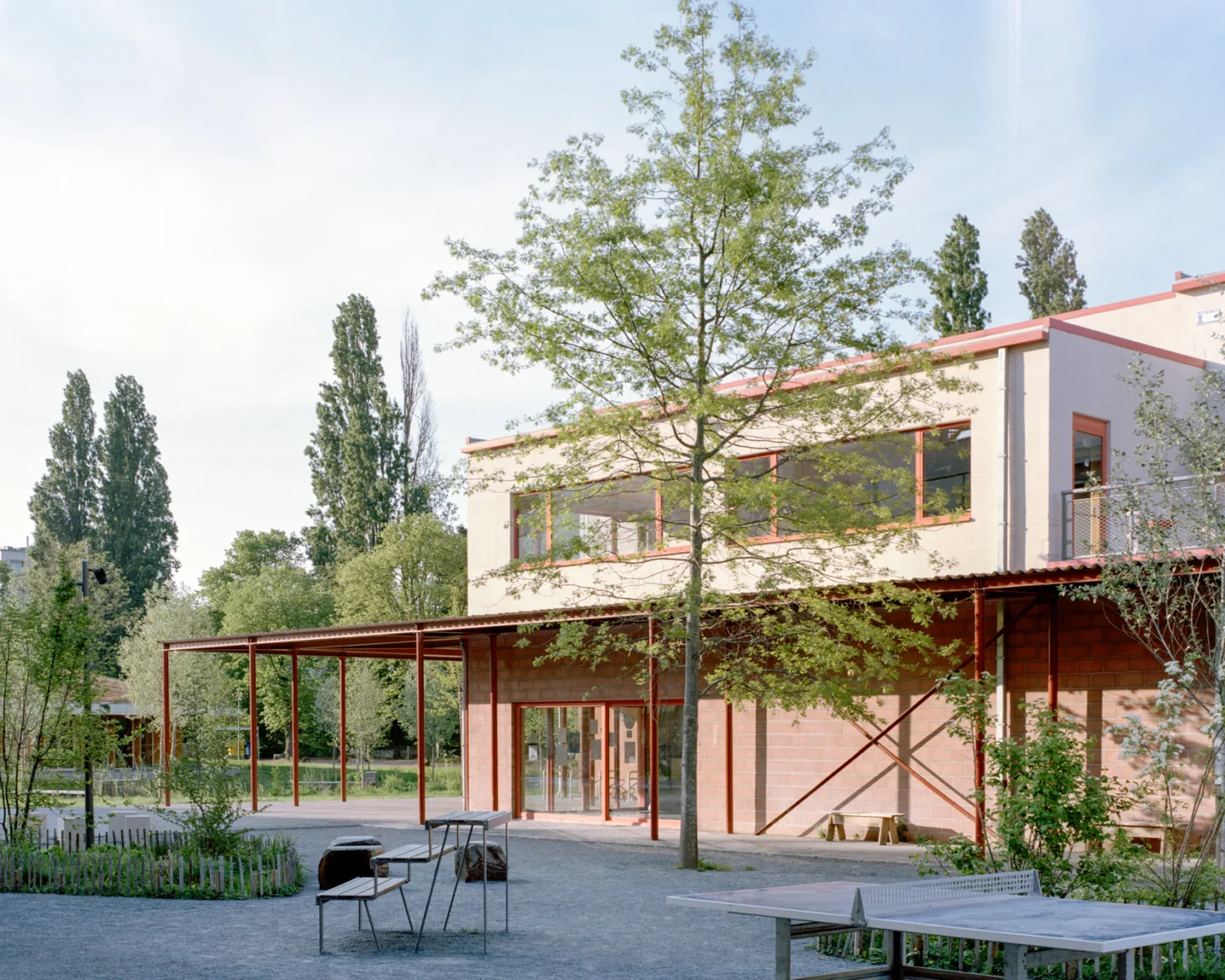
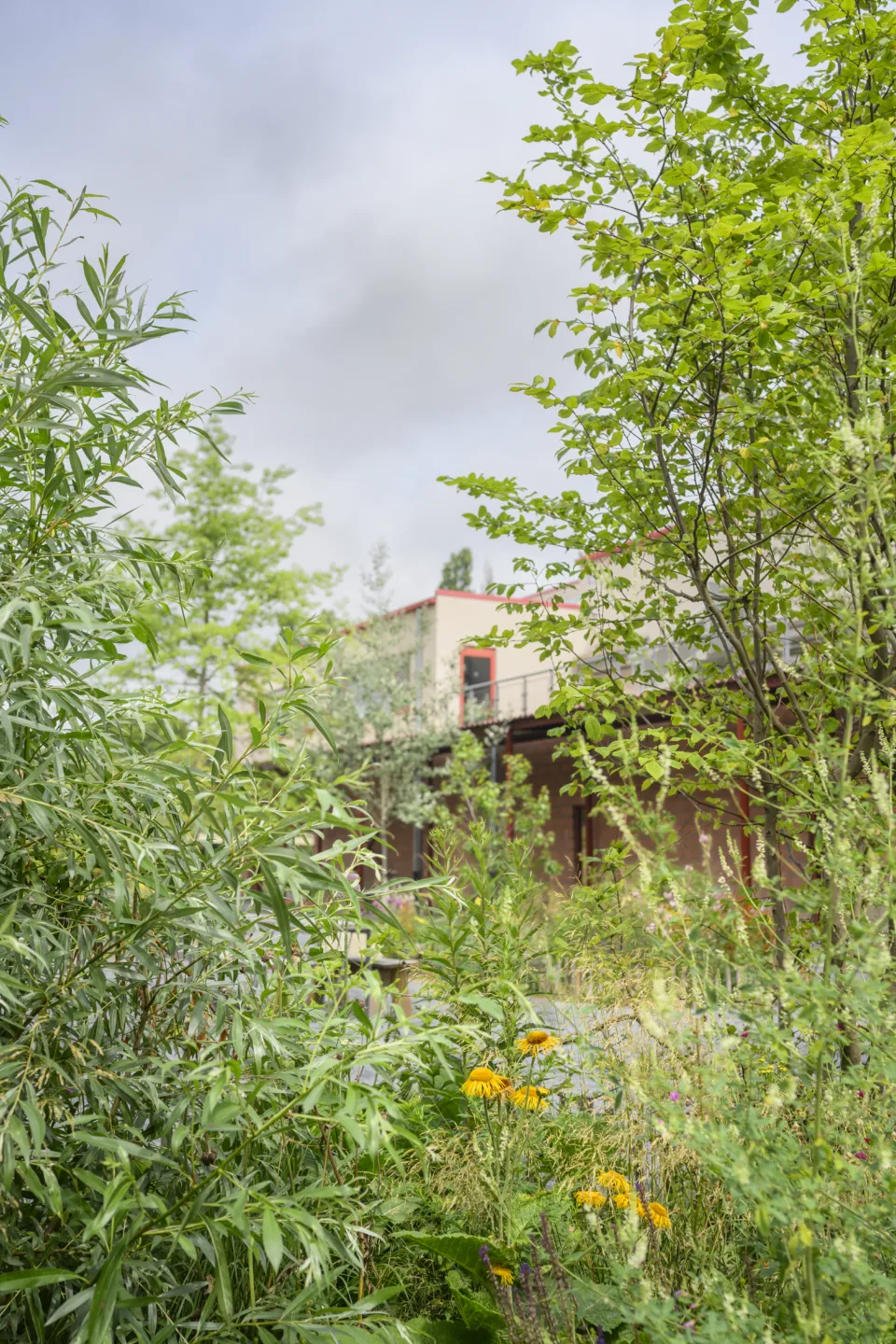
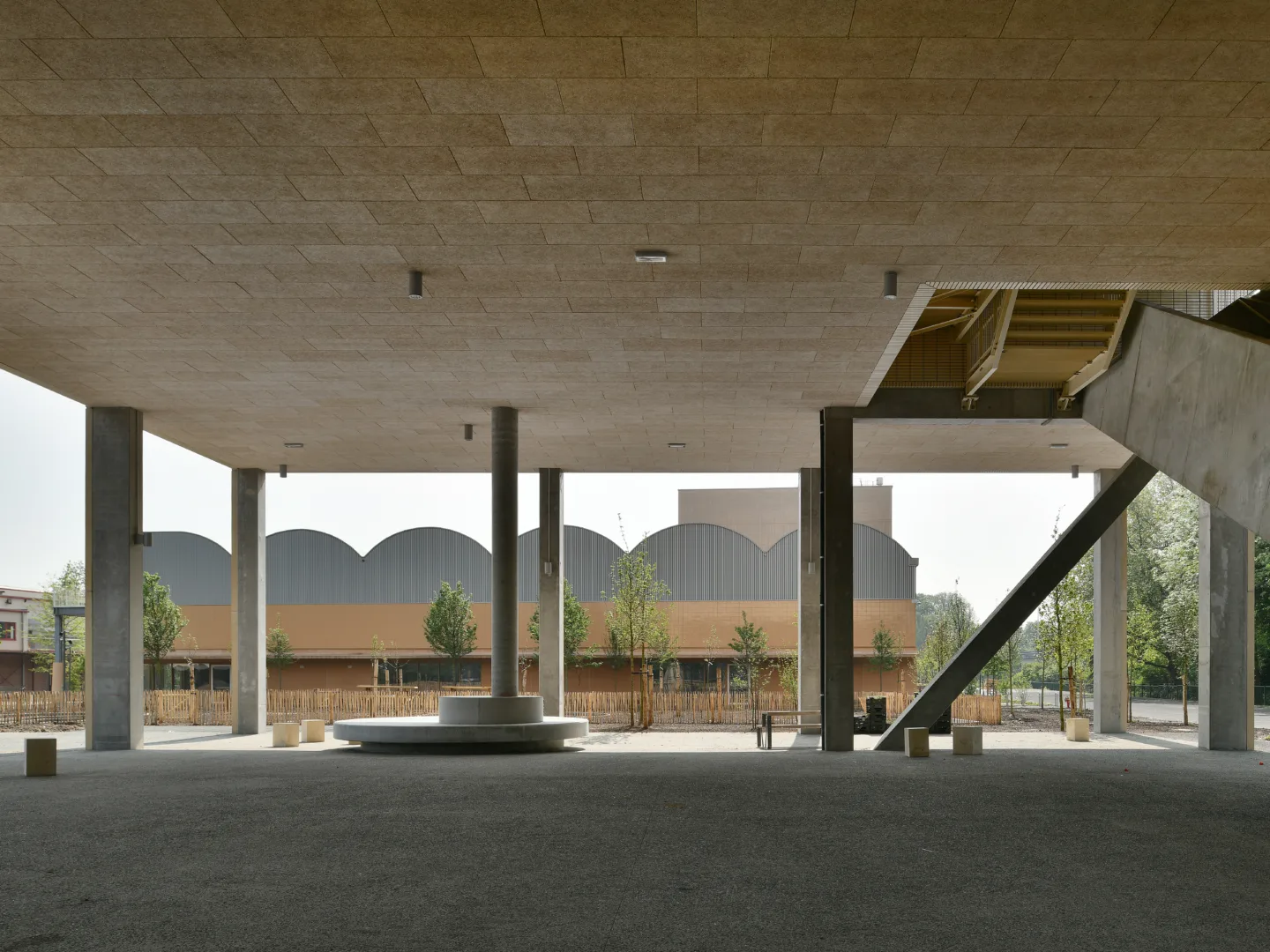
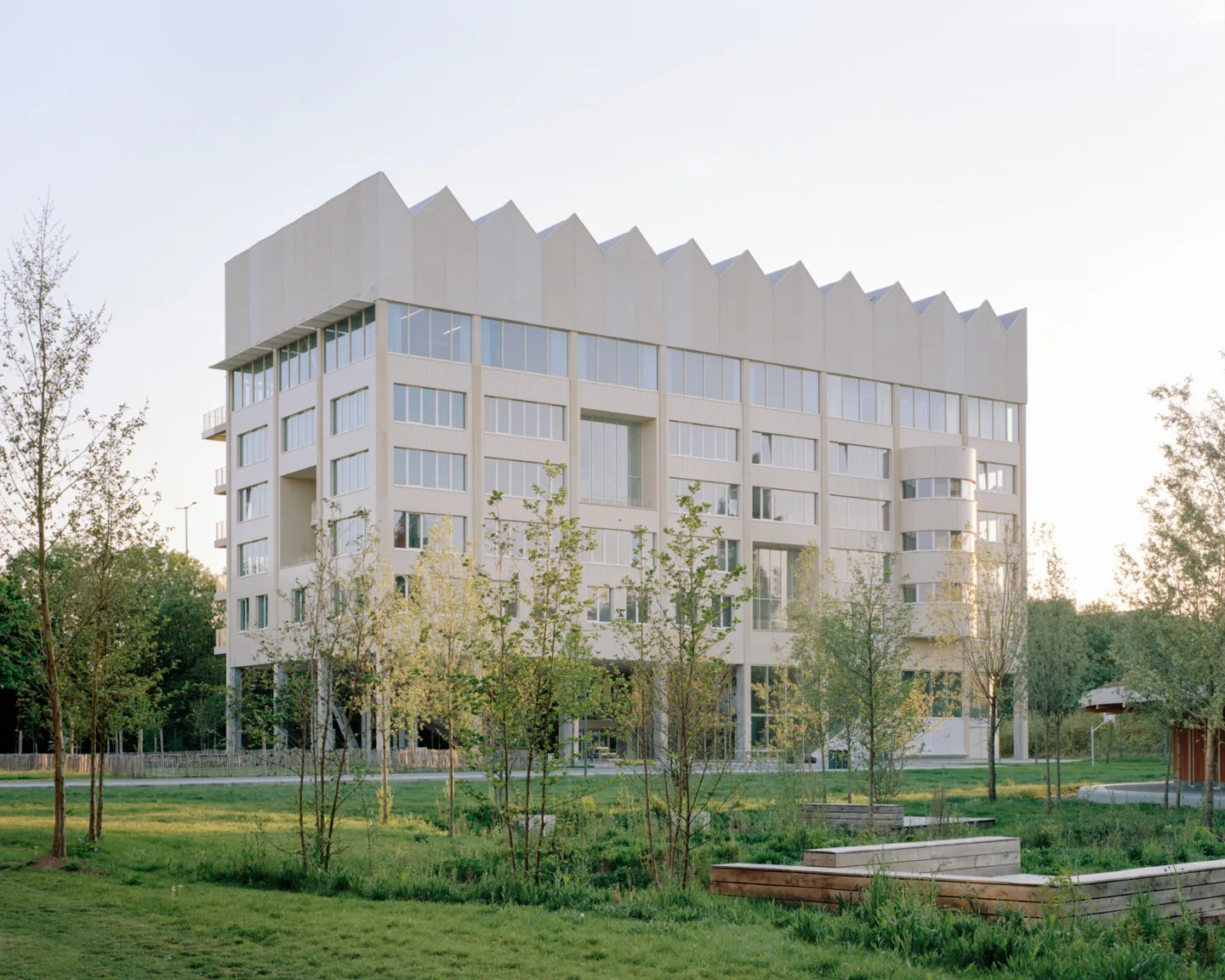
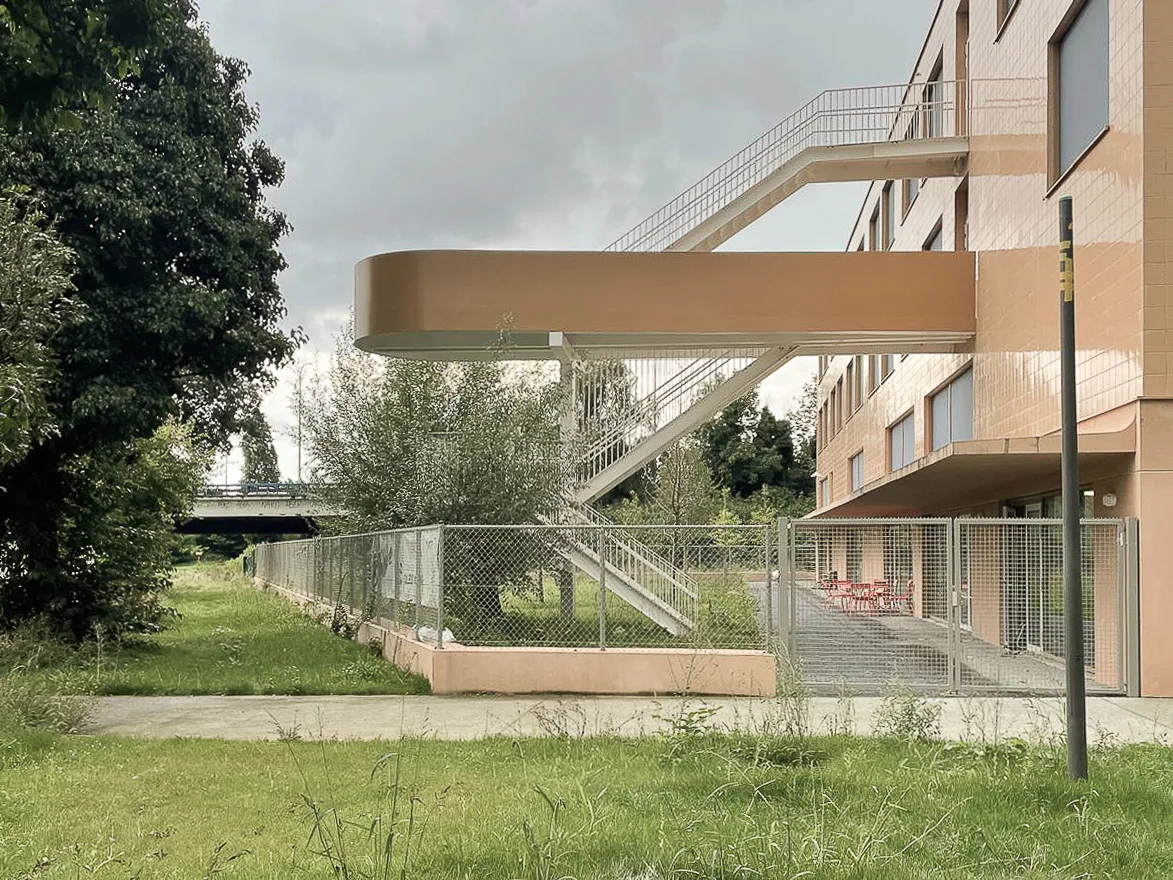
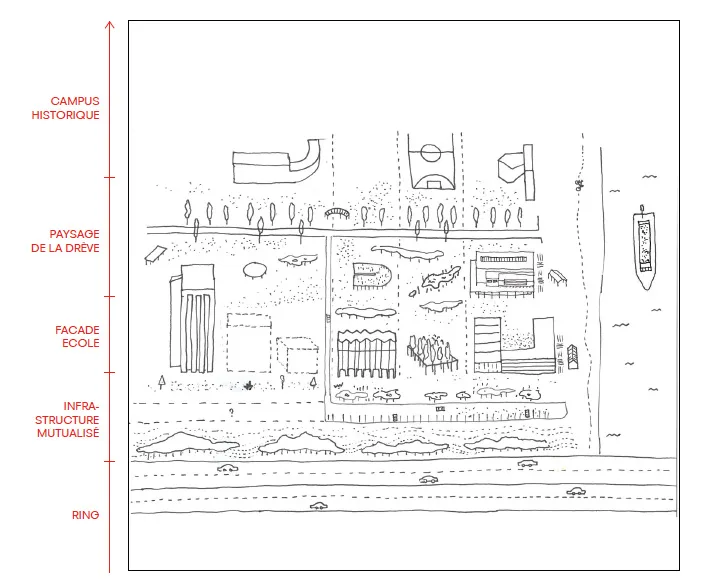
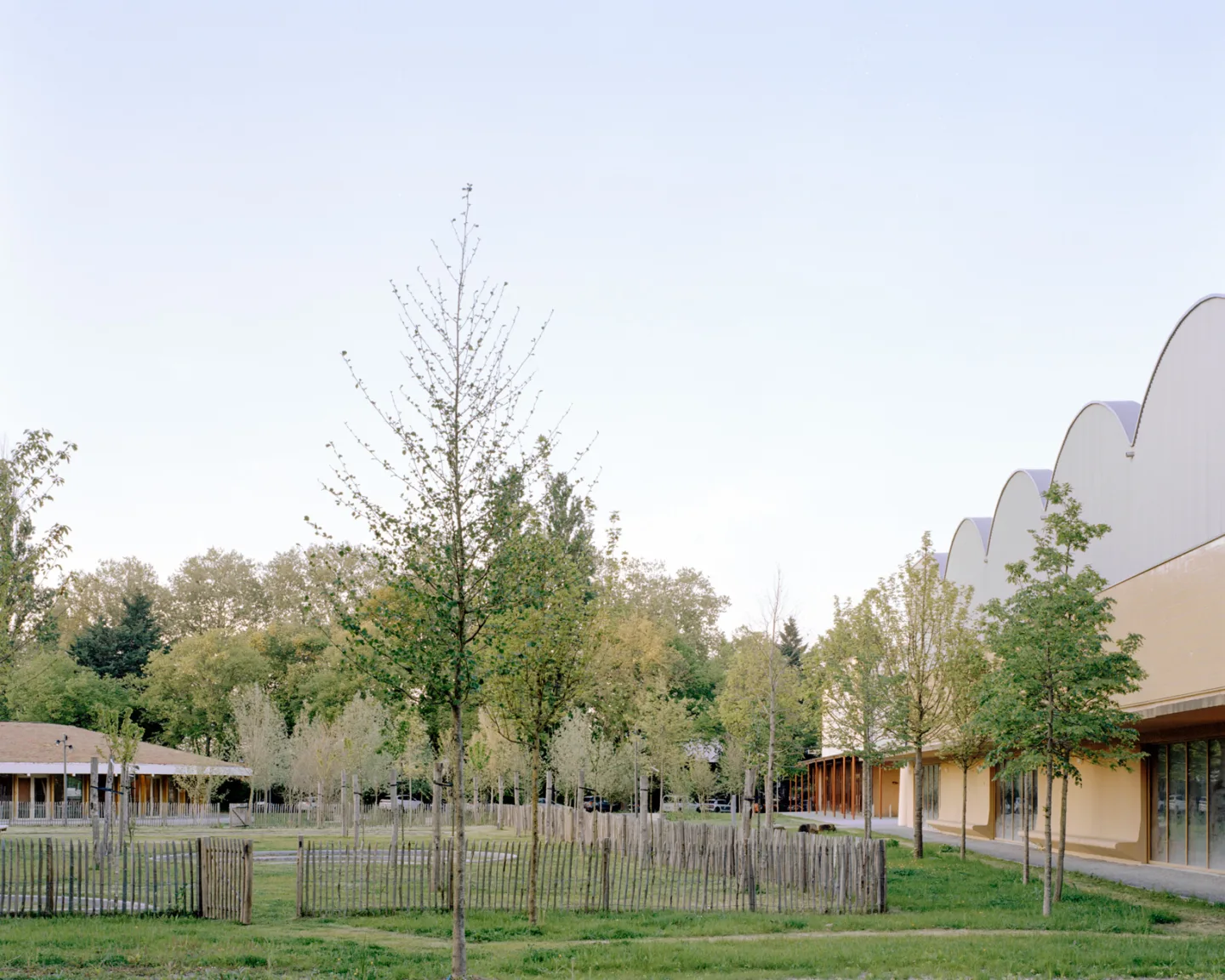
The redevelopment of the CERIA campus is driven by a strong ambition to support innovative and active learning methods. Situated between the Brussels Ring Road and the canal, the site benefits from an existing and valuable landscape structure, which offers a fertile foundation for transformation. The existing tree-lined avenue — the site’s landscape backbone — is reimagined as an accessible axis that opens the campus toward the surrounding neighbourhood and connects it to the canal. With a focus on ecological and architectural integration, enhancing biodiversity and shaping a harmonious educational landscape are central objectives.
Landscape Structure and Biodiversity
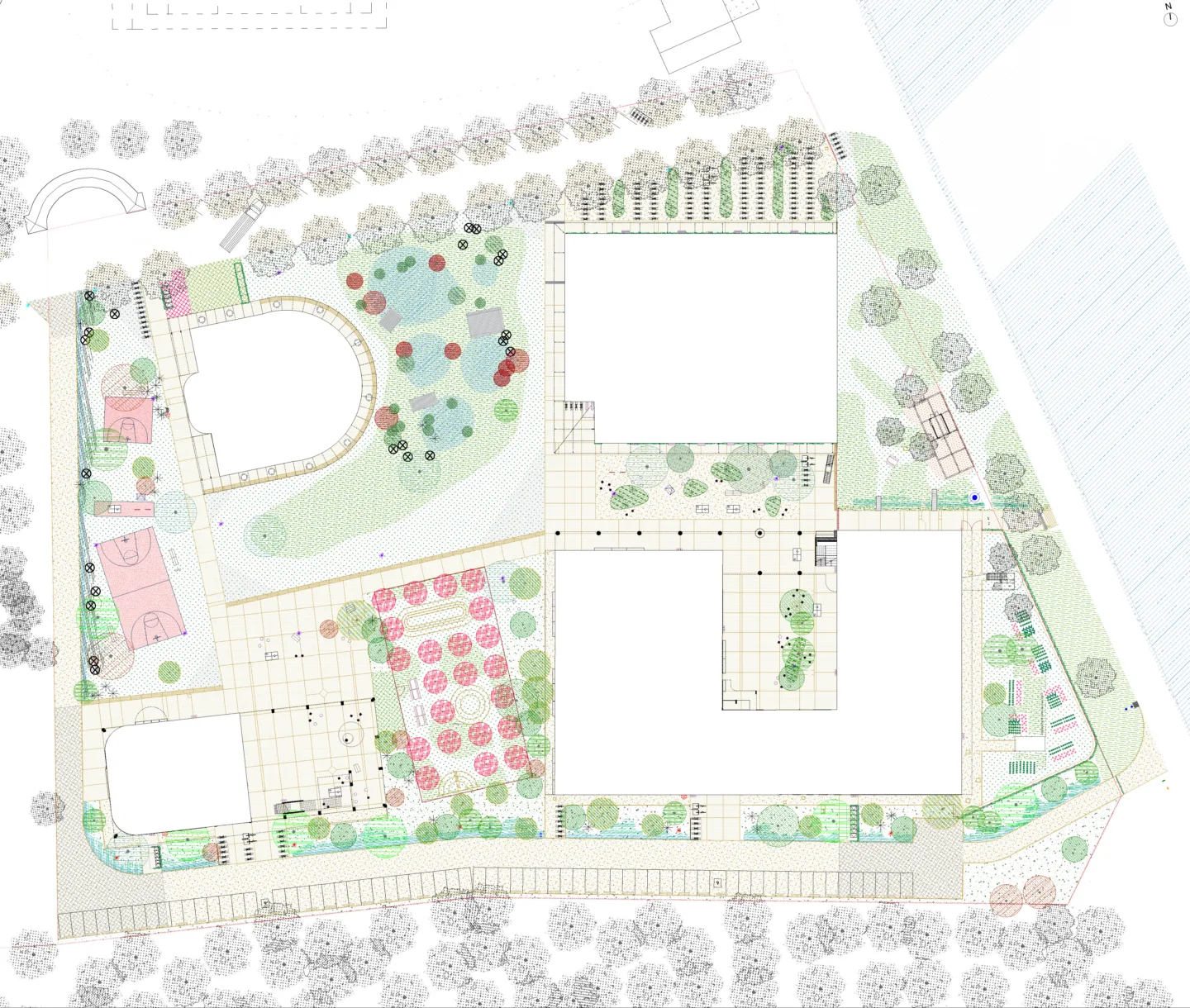
The spatial organization of the campus is structured around complementary nature zones, which combine urban development with ecological richness:
- Forest Habitats
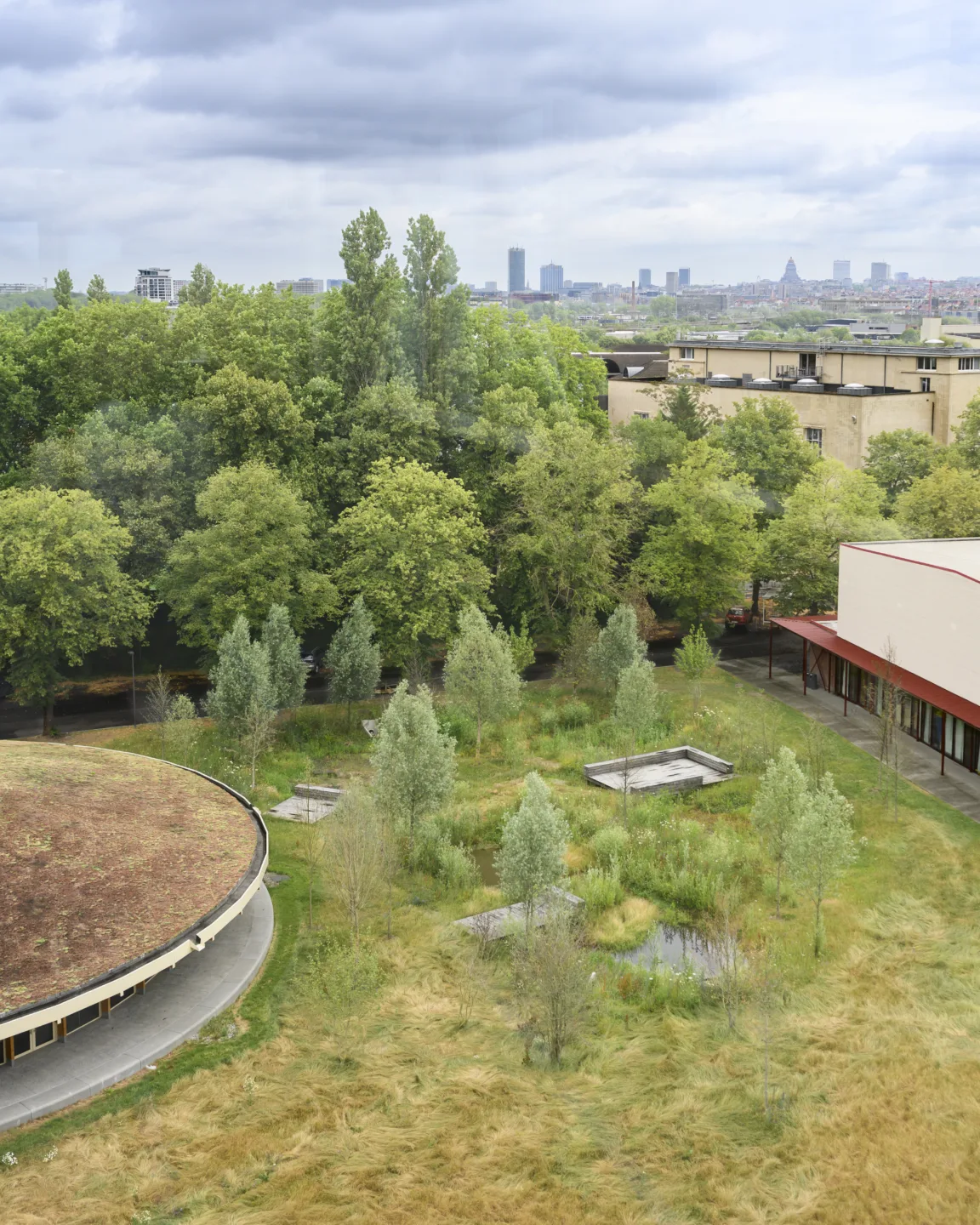
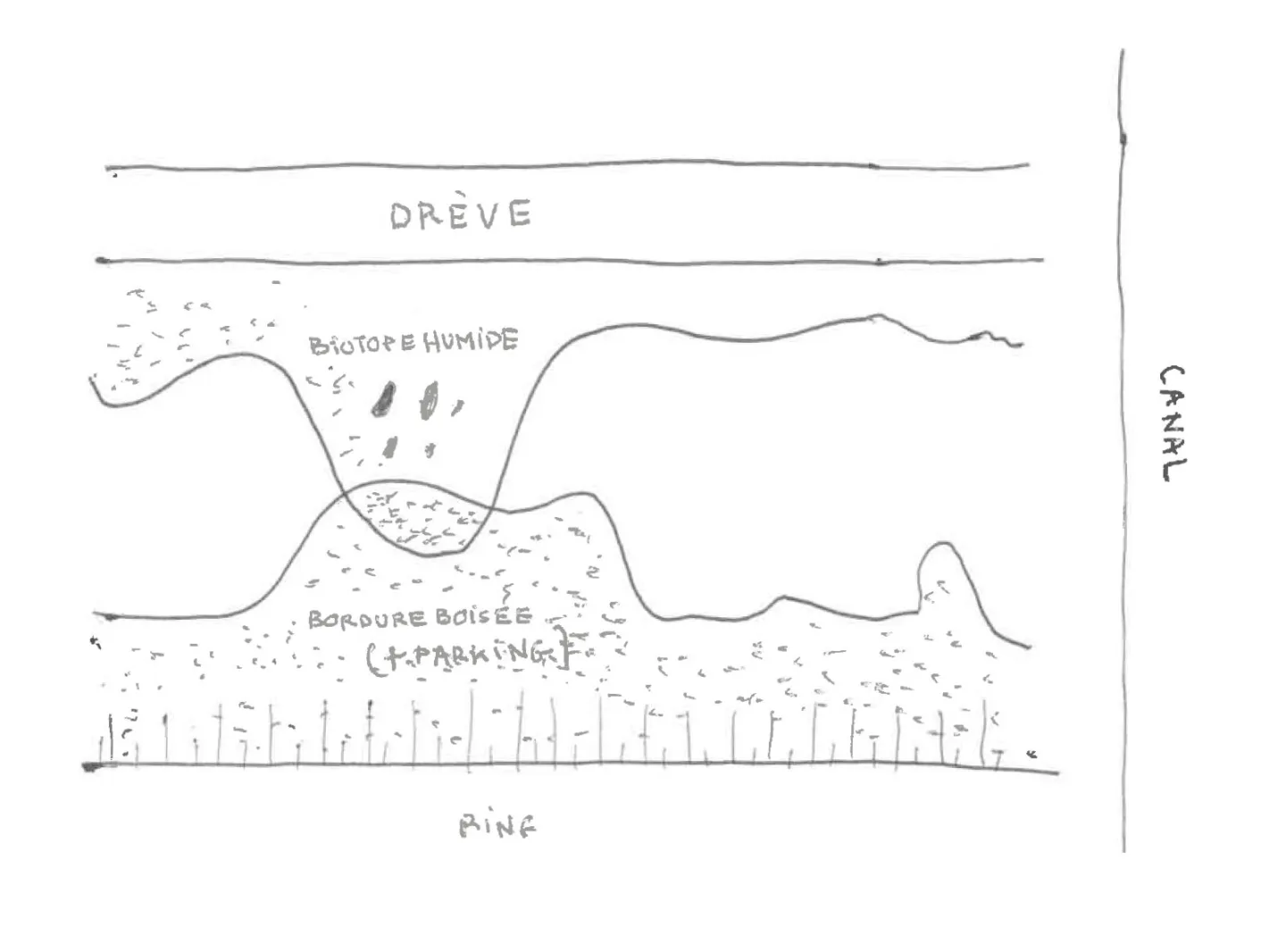
A forest buffer along the Ring Road forms a visual and ecological screen, within which parking zones are discreetly integrated. This green belt extends into the campus, generating microclimates and diverse habitats that contribute to ecological resilience. - Wetland Zones
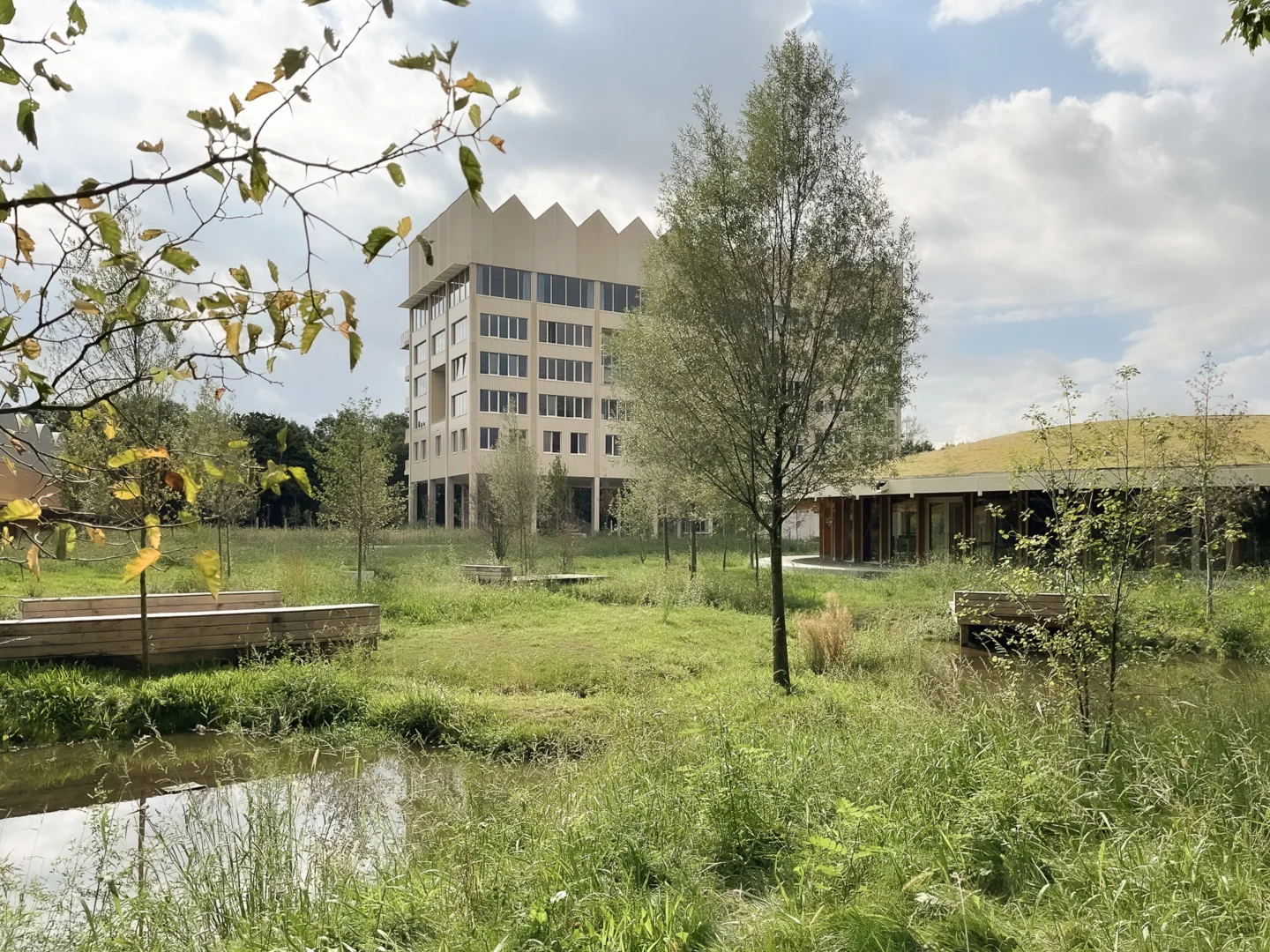
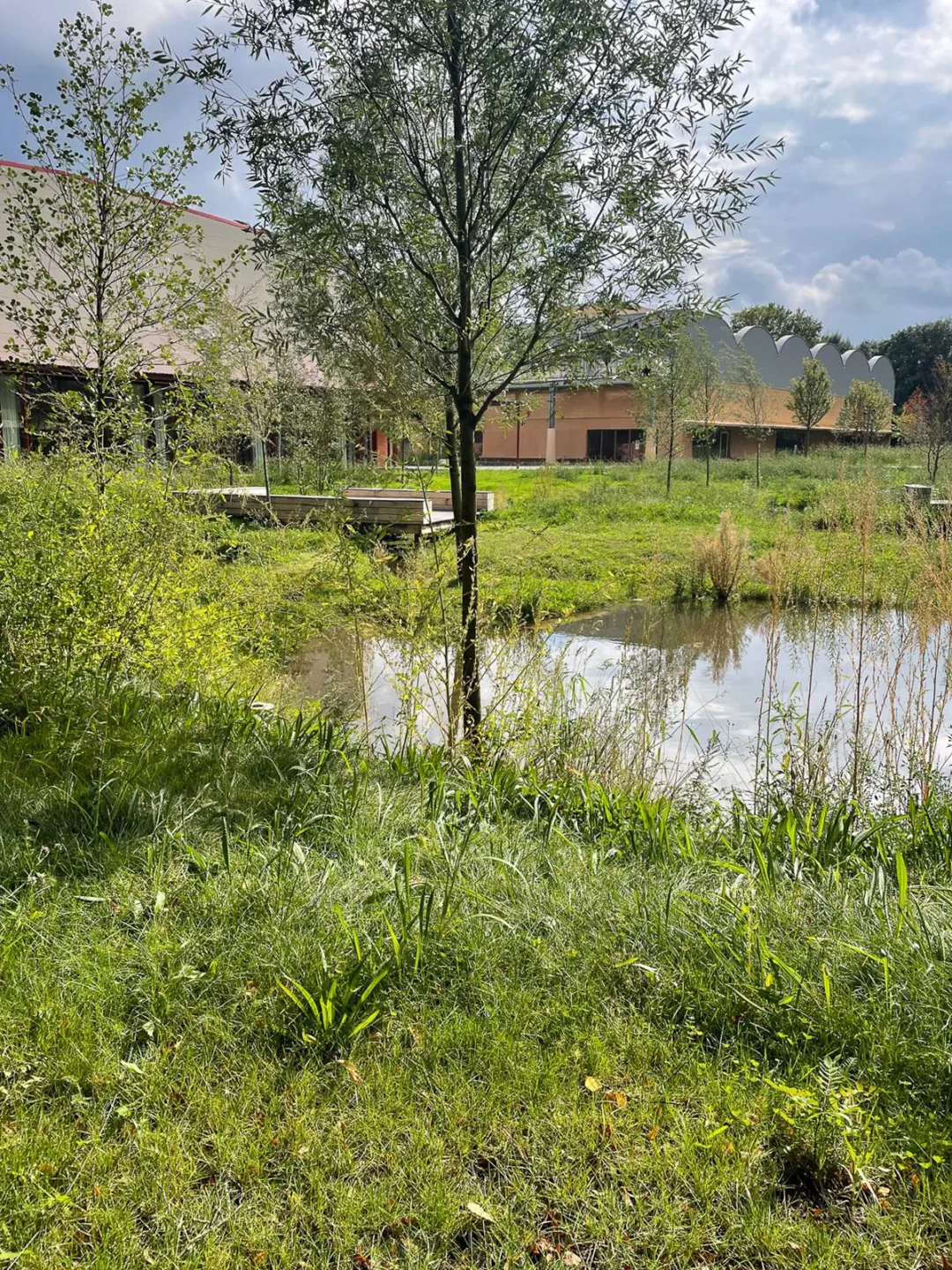
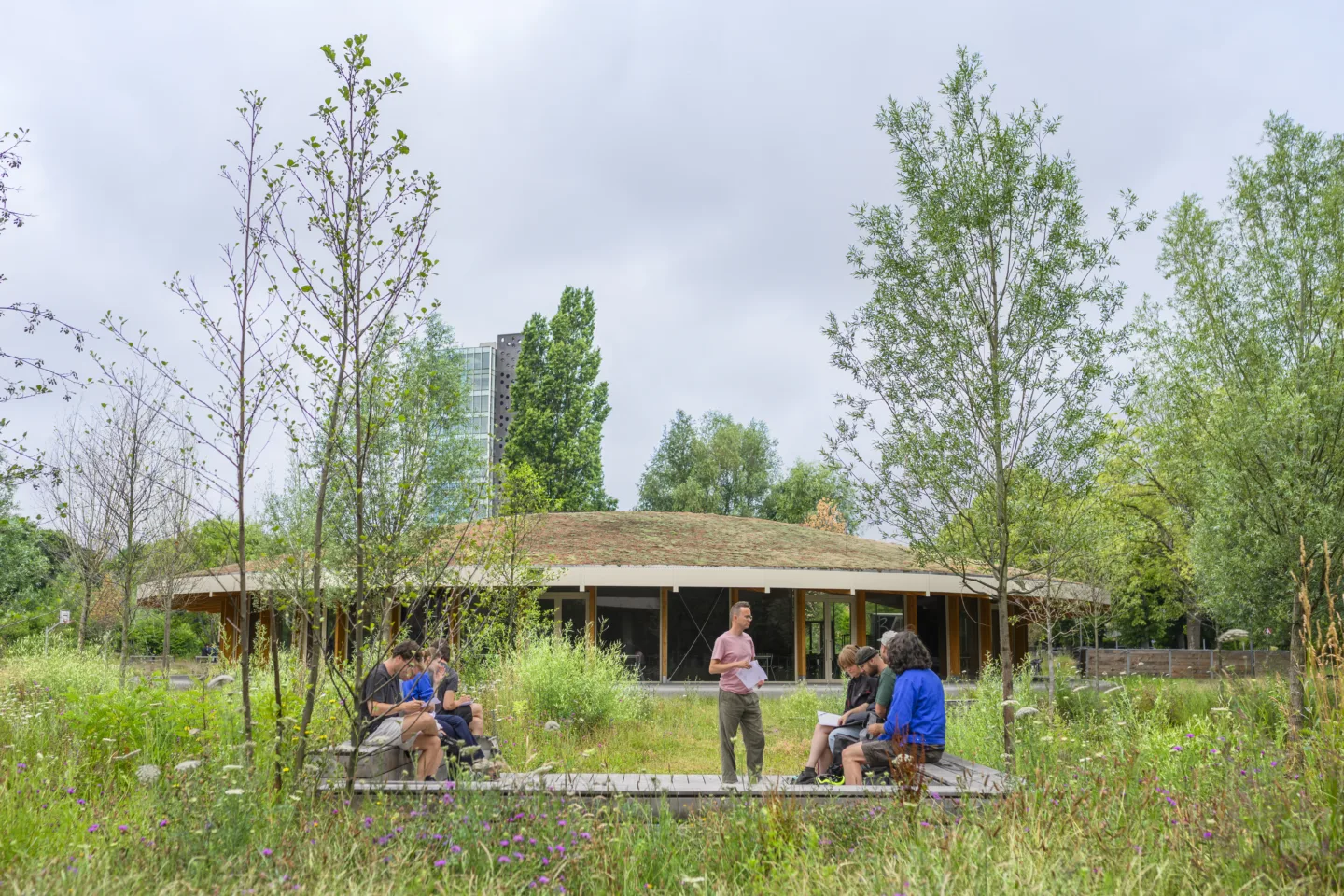
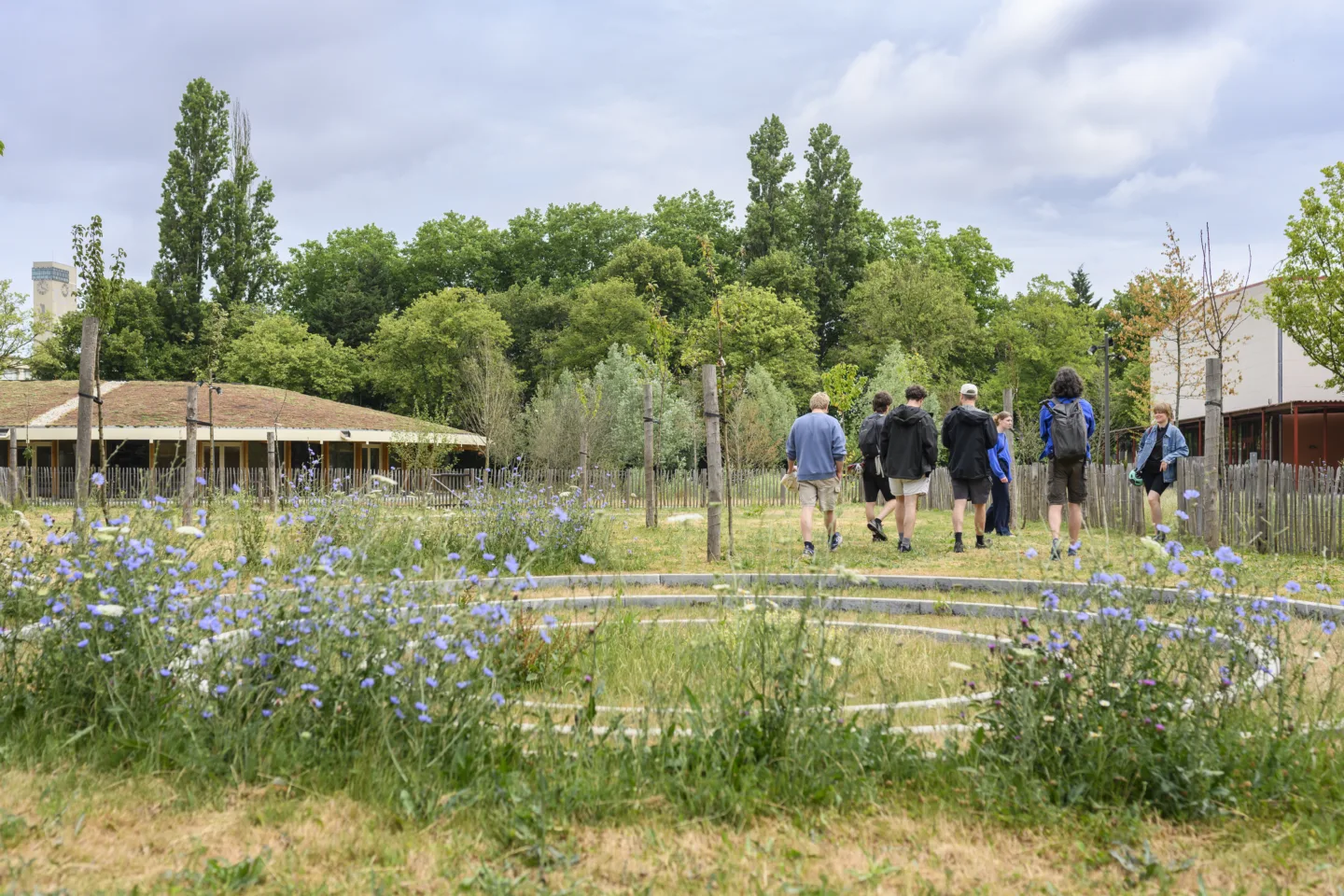
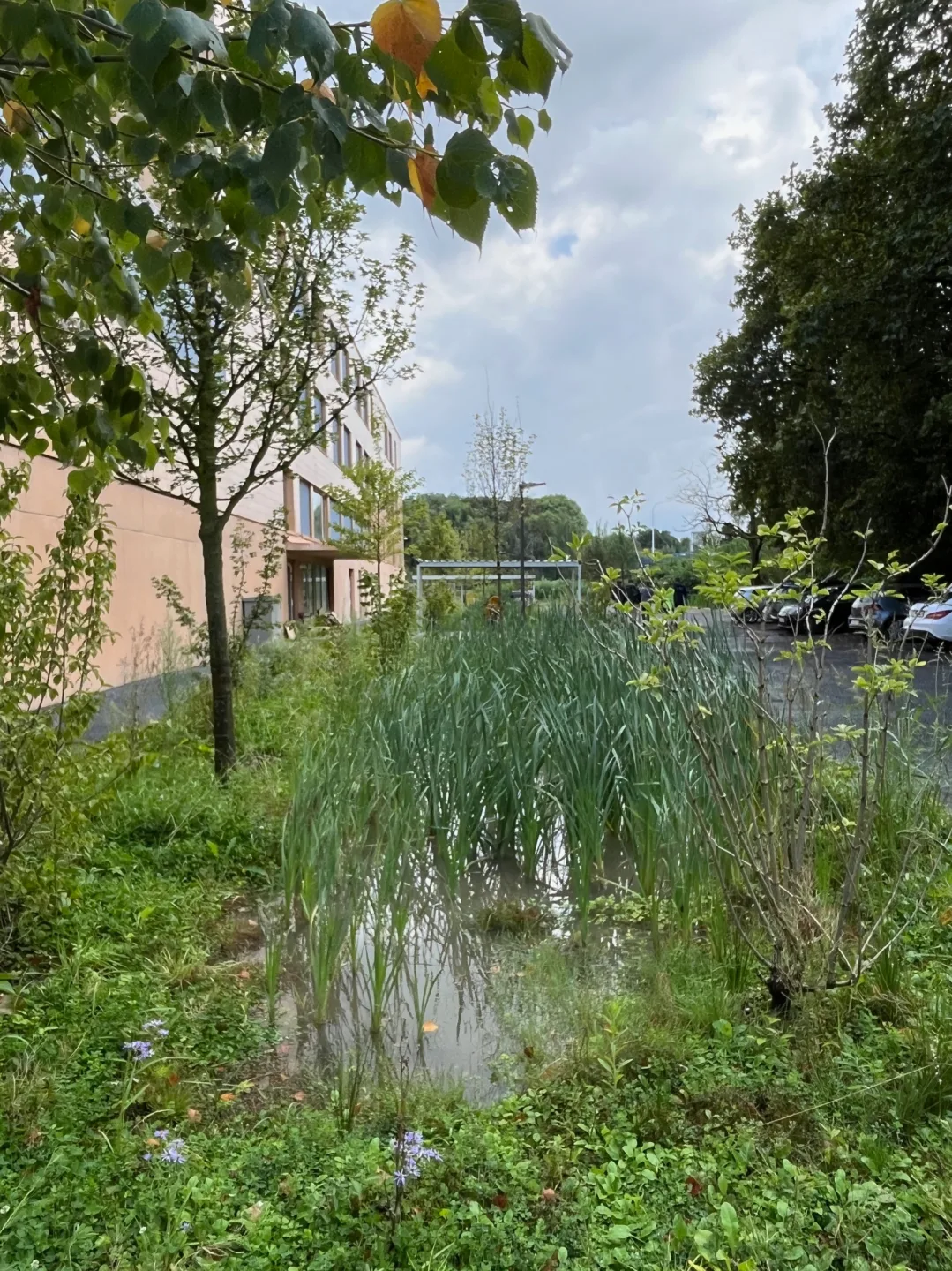
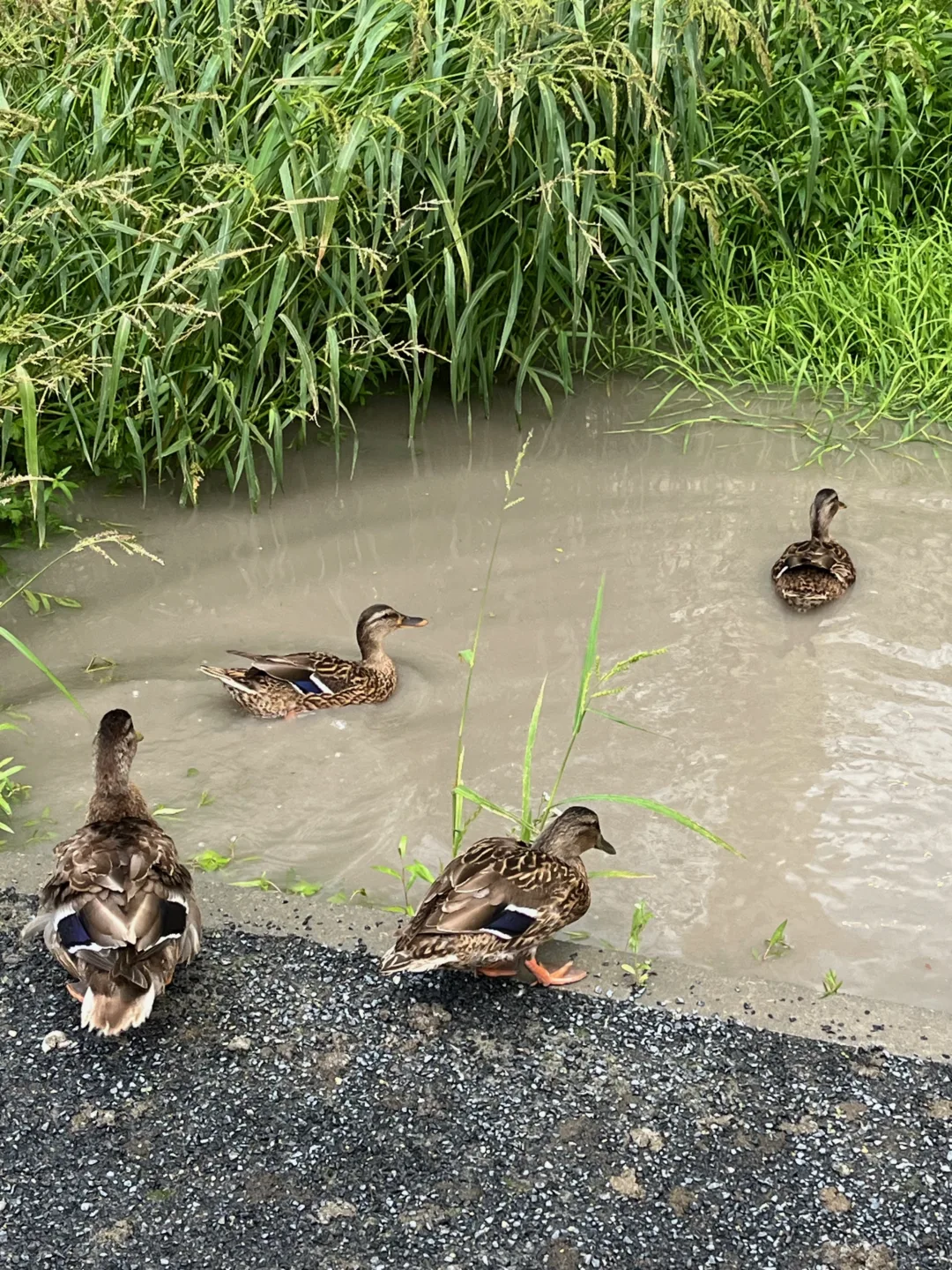
Naturally shaped swales (wadi structures) allow for the infiltration of rainwater while establishing ecologically valuable habitats. These areas offer opportunities for rest and outdoor learning, extending the educational environment beyond the classroom. - Grassland Transitions
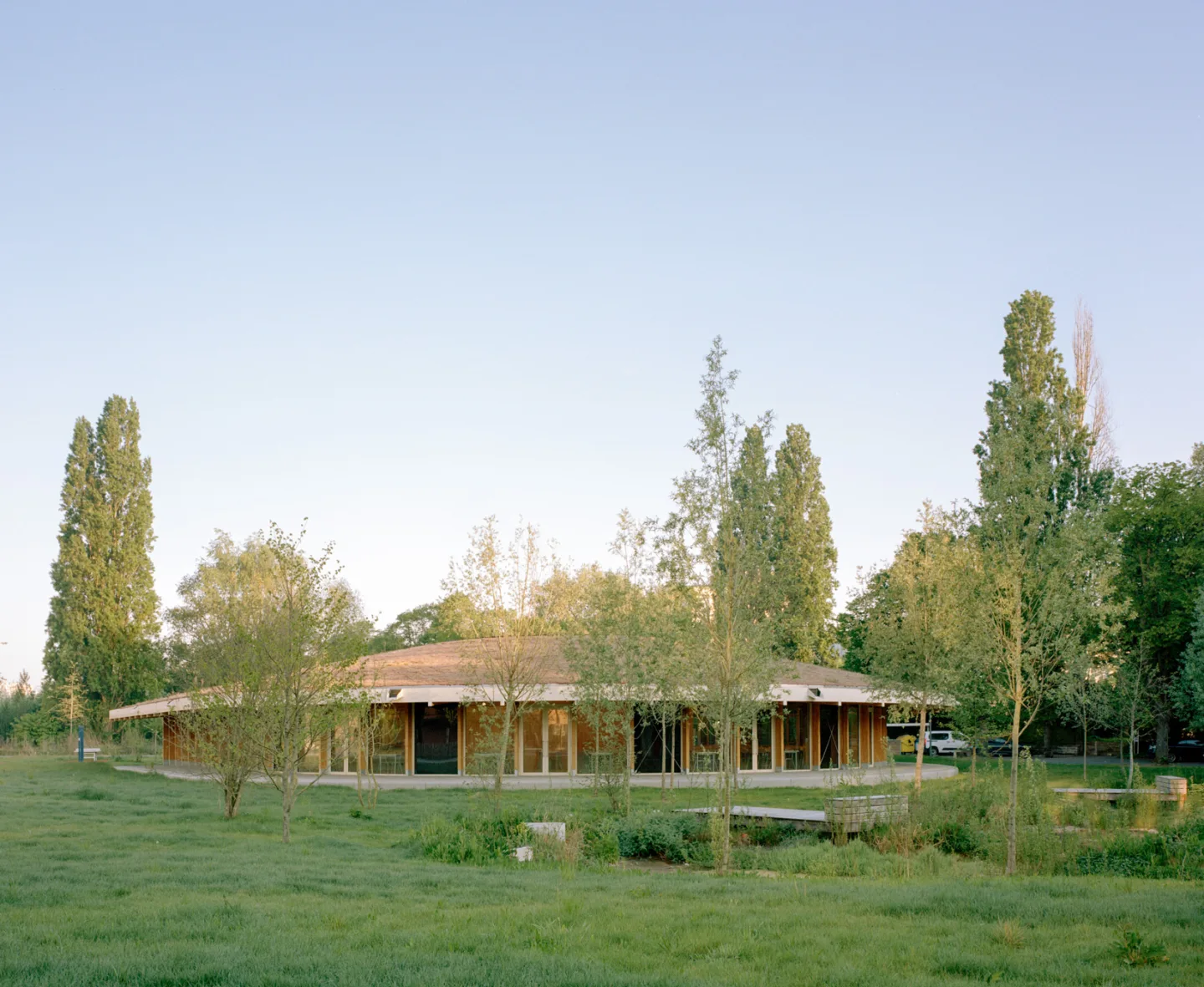
Situated between the woodland and wet zones, a varied grassland acts as an ecological transition zone. This space softens the presence of infrastructure and connects the campus’ central axis with a sense of openness and spatial fluidity.
Public Use and Educational Synergy
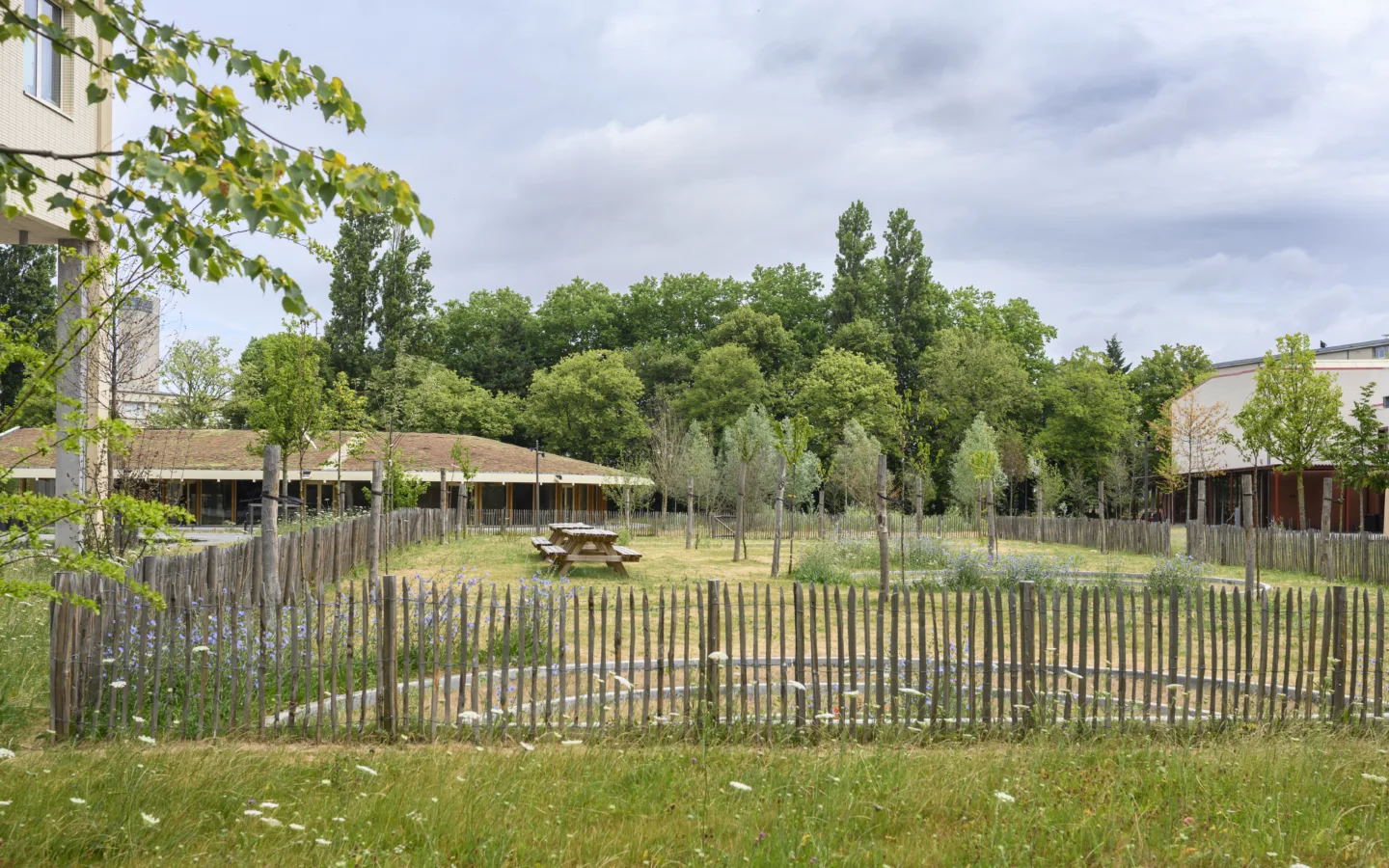
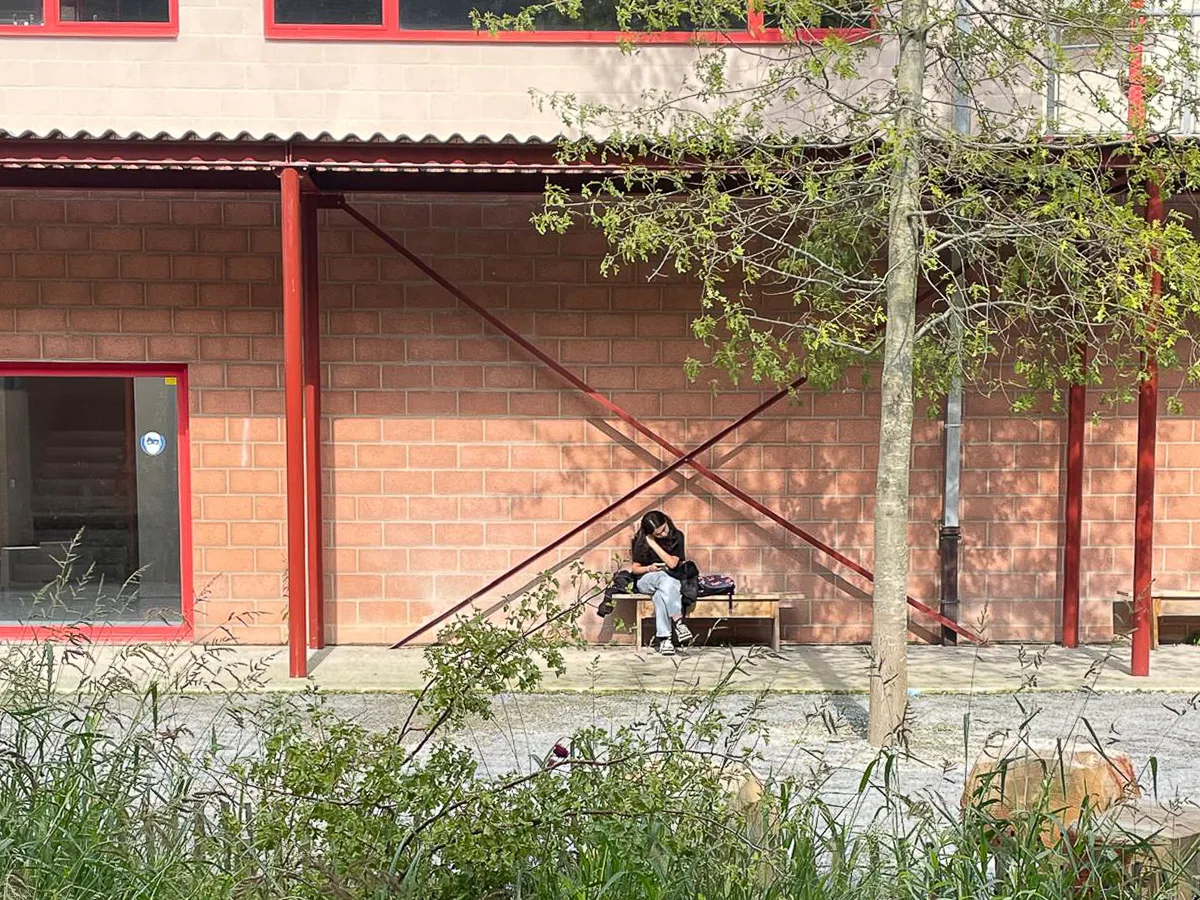
The outdoor environment is designed as a multifunctional space, capable of accommodating cultural events, community gatherings, and educational initiatives. Through thoughtful zoning and inviting spatial design, the landscape becomes both an open-air classroom and a meeting place where diverse educational institutions can come together. In doing so, the project realises its ambition to create an open, dynamic, and innovative campus — one in which nature plays an integral role in both spatial structure and learning processes.
CERIA‑campus – De natuur als drager van een toekomstgerichte leeromgeving
De herontwikkeling van de CERIA‑campus schuift een sterke ambitie naar voor om innovatieve, actieve leermethoden te ondersteunen. De site, tussen Ringweg en kanaal gelegen, kent een waardevolle landschapsstructuur die zich hiertoe perfect leent. De bestaande dreef – de landschappelijke ruggengraat – wordt omgevormd tot een toegankelijke as die de campus opent naar de buurt en verbindt met het kanaal. Met aandacht voor ecologische en architecturale integratie, is het verbeteren van de biodiversiteit en het vormgeven van een harmonieus landschap een centrale doelstelling.
Landschapsstructuur en biodiversiteit
De campus wordt ruimtelijk georganiseerd rond complementaire natuurzones die stedelijke ontwikkeling combineren met ecologische rijkdom:
Boshabitats
Een boszoom langs de Ringweg vormt een landschappelijke buffer, waarin parkeerzones zijn geïntegreerd om autoverkeer visueel en ecologisch te scheiden van de campus. Deze zone waaíert uit in de campus en creërt zo microklimaten en waardevolle habitats.
Wetlandzones
Natuurlijk vormgegeven wadi’s maken natuurlijke infiltratie van regenwater mogelijk en creëren ecologische waardevolle habitats; ze nodigen uit tot ontspanning en buiten leren buiten de klassikale omgeving.
Tussen bos en natte zones bevindt zich een gevarieerde graslandzone, die als ecologische overgangszone de centrale as verbindt, infrastructuur verzacht en een organisch en ruimtelijk gevoel geeft.
Publiek gebruik en educatieve synergie
De buitenruimte is ontworpen als multifunctionele omgeving waar zowel culturele evenementen als educatieve initiatieven plaatsvinden. Via uitnodigende vormen en zonering fungeert het landschap als buitenklaslokaal en ontmoetingsplek waar verschillende scholen en opleidingen elkaar ontmoeten. Hiermee wordt de ambitie gerealiseerd om een open, dynamische en innovatieve campus te vormen, waarbij natuur een integraal element is in zowel de ruimtelijke structuur als het leerproces.