Mobile Forest C-mine
C-Mine Genk – Nature as a Counterbalance to Industrial Monumentality
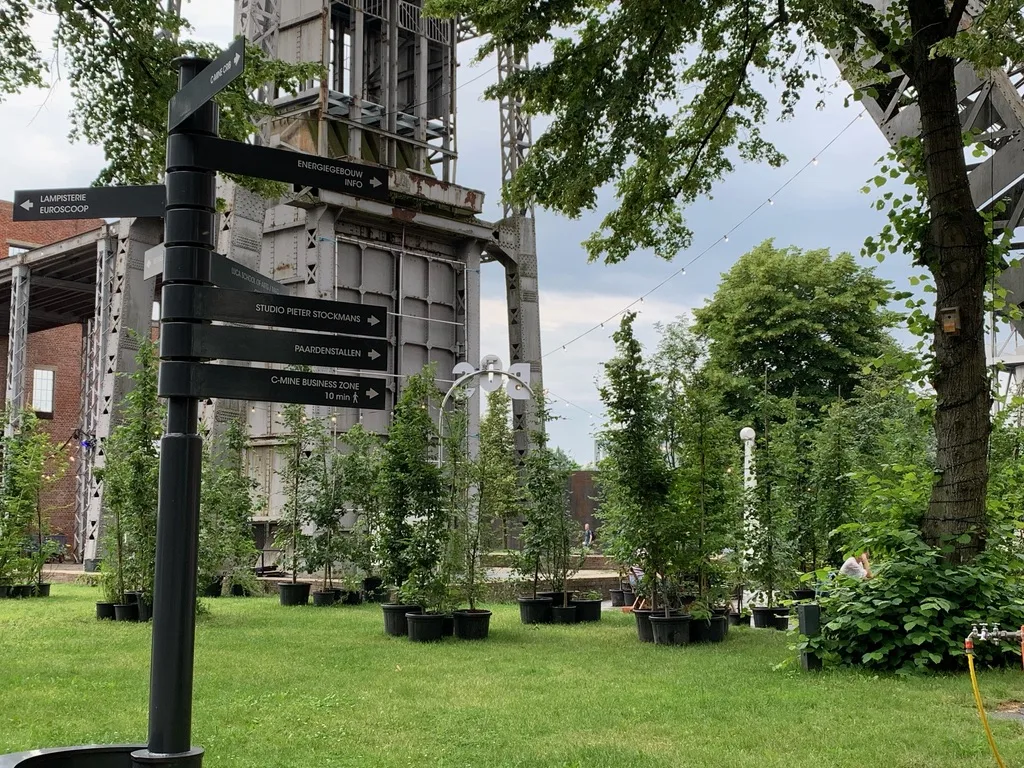
C-Mine Genk serves as a cultural hub, home to a broad range of creative and cultural actors. The central square in front of the C-Mine House is visually dominated by the imposing heritage elements of the former mining site—shaft blocks, embankments, and surrounding buildings—that embed the industrial scale of the past deeply into the urban fabric. Yet despite this powerful visual identity, the square lacks elements of human scale, shelter, and sensory engagement.
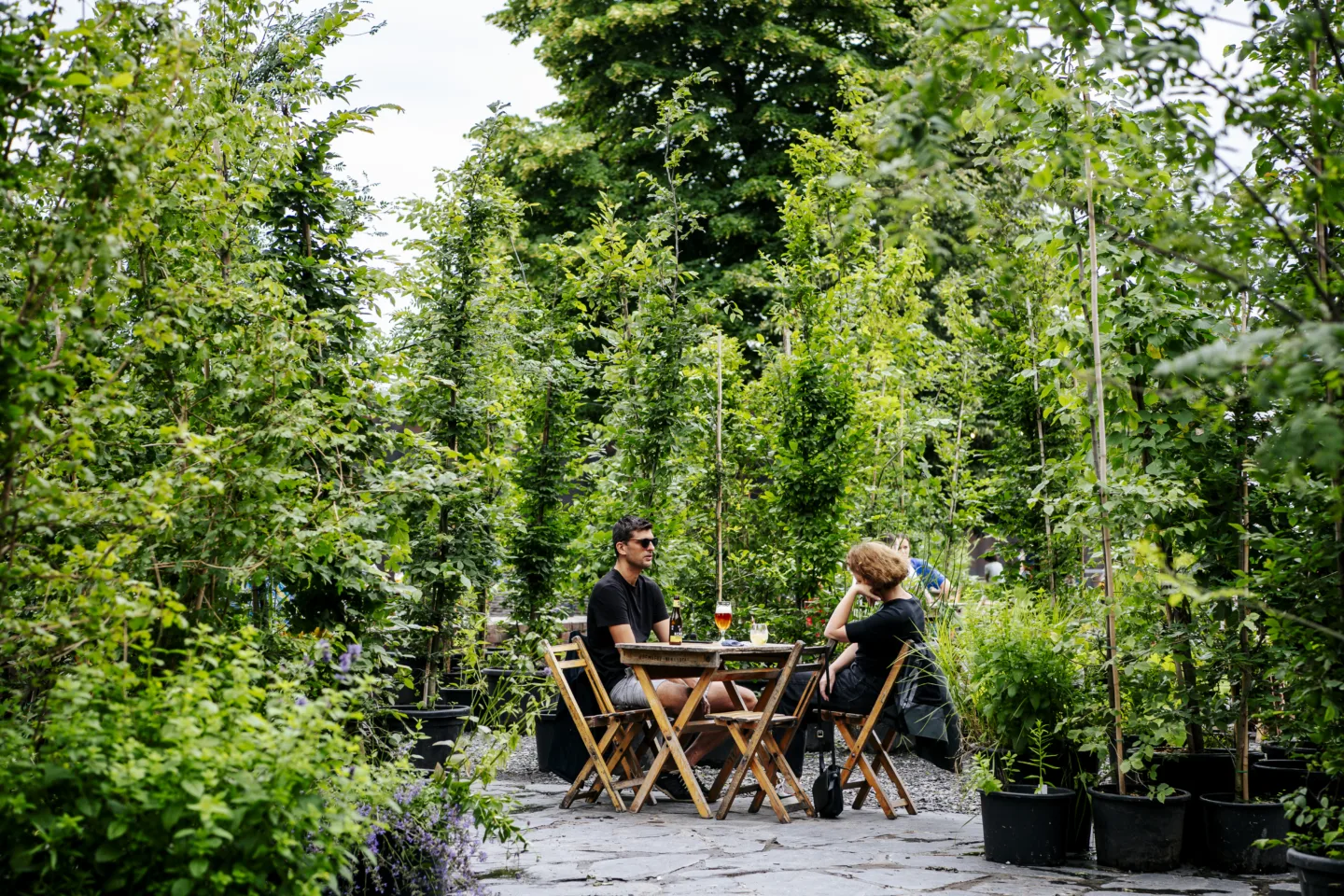
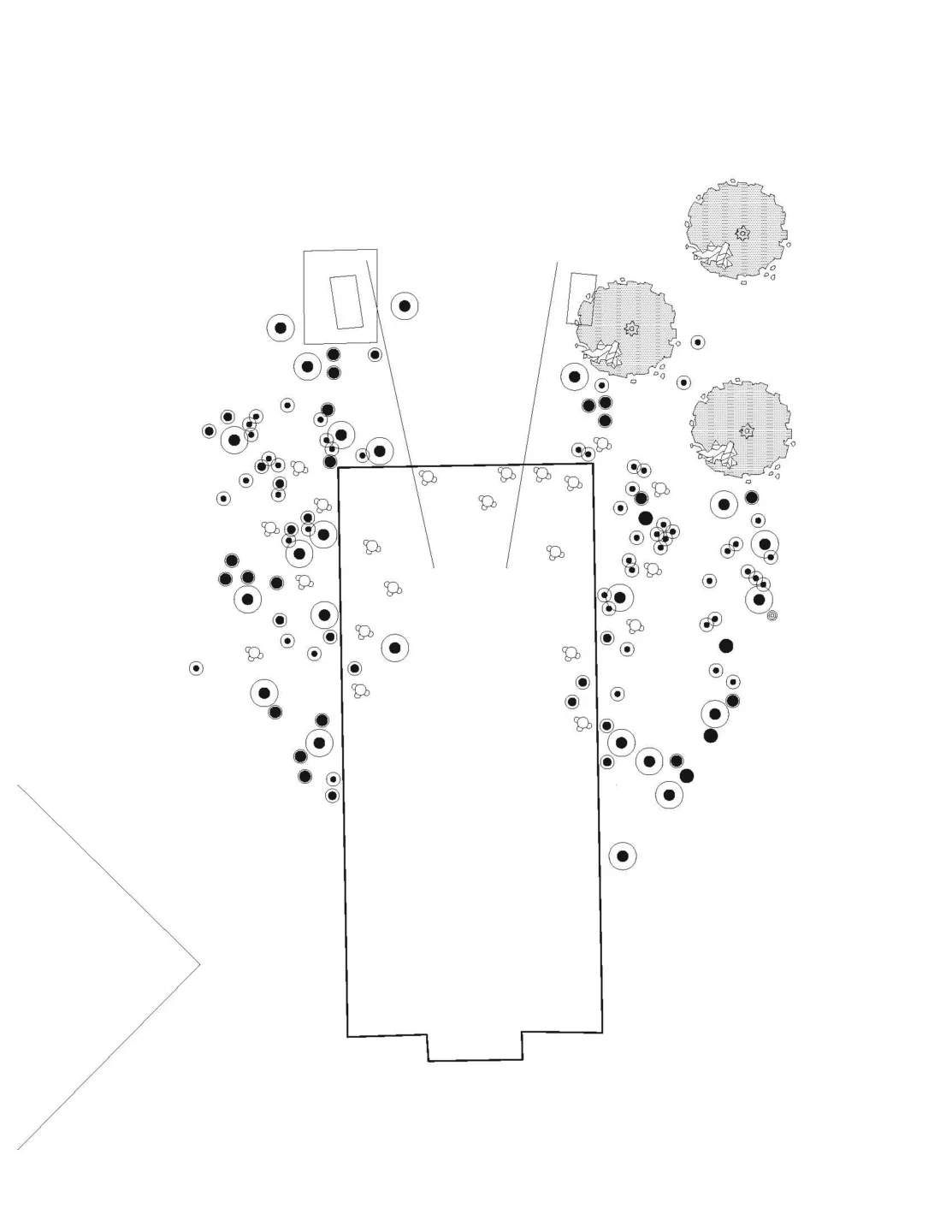
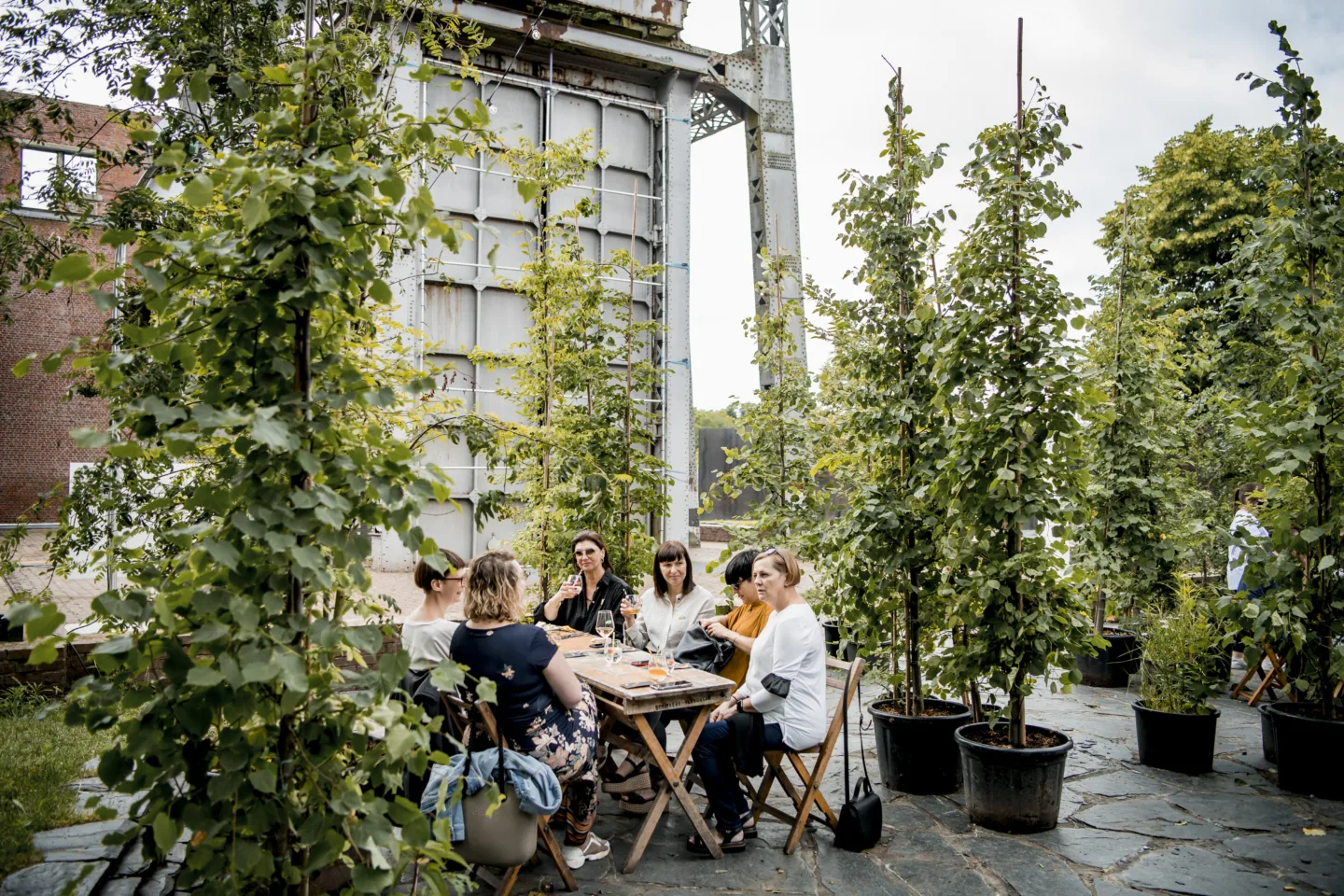
The temporary intervention Summer Activation C-Mine responds to these shortcomings as a catalyst for transformation. At its core is a layered approach built around a mobile ecosystem: a temporary, movable forest that explores the potential of vegetative structures in a mineral heritage landscape. The installation functions as a porous environment, with smaller rooms or “pockets” that range from open and inviting to enclosed and intimate. The result is a dual intervention: one that counterbalances the monumental setting at the square scale, while also offering a more nuanced, human-scaled spatial experience.
Vegetation Strategy – A Temporary Yet Ecologically Rich Forest Structure
The vegetation structure of the Mobile Forest is inspired by the natural layering of forest ecosystems. Four strata—from ground cover and understory to shrubs and young trees—are combined into a system rich in spatial diversity and biodiversity potential. The composition is based on native, site-appropriate species that can thrive in urban conditions and contribute to local ecological networks.
The ground layer includes a mix of wild grasses, herbs, and flowering plants, enriched with aromatic and edible species. This results in a plant palette rich in texture, scent, color, and sensory experience. Seasonal dynamics are made visible, with different plant combinations taking the lead throughout the year—including in autumn and winter, when seed heads, stems, and leaf remnants create a distinctive winter silhouette.
This vegetation strategy proves that temporary doesn’t mean ecologically superficial—and shows how mobile ecosystems can function as structural tools in designing adaptive, inclusive, and climate-resilient public spaces.
C-Mine Genk – Natuur als tegengewicht voor industriële monumentaliteit
De C-Mine site in Genk fungeert als cultureel knooppunt en biedt onderdak aan een breed palet van creatieve en culturele actoren. Het centrale plein voor het Huis van C-Mine wordt visueel gedomineerd door de robuuste erfgoedelementen van de voormalige mijnsite – schachtblokken, taluds en omringende gebouwen – die de industriële schaal van het verleden blijvend verankeren in het stadsweefsel. Ondanks deze krachtige visuele identiteit mist het plein echter elementen van menselijke schaal, beschutting en zintuiglijke betrokkenheid.
De tijdelijke ingreep ‘Zomeractivatie C-Mine’ grijpt deze tekorten aan als motor voor transformatie. Centraal staat een gelaagde interventie rond het concept van een mobiel ecosysteem: een tijdelijk, verplaatsbaar bos dat de potentie van vegetatieve structuren in een verhard erfgoedlandschap onderzoekt. De installatie fungeert als poreus en doorwaadbaar landschap, waarin kleinere kamers of ‘pockets’ ontstaan – open en uitnodigend of juist omsloten en intiem. Hierdoor wordt niet alleen op pleinschaal ingegrepen, als visueel tegengewicht voor het monumentale kader, maar wordt ook op menselijke schaal een rijkere ruimtelijke ervaring geboden.
Vegetatiestrategie – Een tijdelijke maar ecologisch rijke bosopbouw
De vegetatiestructuur van het Mobiel Bos is geïnspireerd op de natuurlijke stratificatie van bosbiotopen. Vier vegetatieniveaus – van kruidlaag tot onderetage, struiken en jonge bomen – worden gecombineerd tot een systeem met hoge ruimtelijke variatie en biodiversiteitspotentie. De opbouw vertrekt van standplaatsgeschikte, inheemse soorten, die bestand zijn tegen de stedelijke omstandigheden en bijdragen aan lokale ecologische netwerken.
De kruidlaag is samengesteld uit een mengsel van wilde grassen, kruidachtigen en bloeiers, aangevuld met aromatische en smaakrijke soorten. Dit resulteert in een vegetatie die rijk is aan textuur, geur, kleur én beleving. De seizoensdynamiek wordt voelbaar doordat steeds andere plantcombinaties op de voorgrond treden – niet alleen in lente en zomer, maar ook in herfst en winter, wanneer zaaddozen, stengels en bladresten zorgen voor een karaktervol wintersilhouet.
Deze tijdelijke vegetatiestrategie bewijst dat tijdelijkheid geen compromis hoeft te zijn voor ecologische rijkdom – en toont hoe mobiele ecosystemen als structurele instrumenten kunnen fungeren in het ontwerpen van adaptieve, inclusieve en klimaatrobuuste publieke ruimte.