

ZIN
The ZIN project transforms the former WTC I and II towers in Brussels’ North District into a hybrid complex combining offices, residences, a hotel, retail spaces, and sports facilities. This large-scale repurposing project serves as a model for sustainable and circular urban development, with a strong focus on reuse, flexibility, and ecological integration. The central office section, the Marie Belpaire Building, accommodates 3,900 Flemish civil servants, making it the main administrative hub of the Flemish Government.
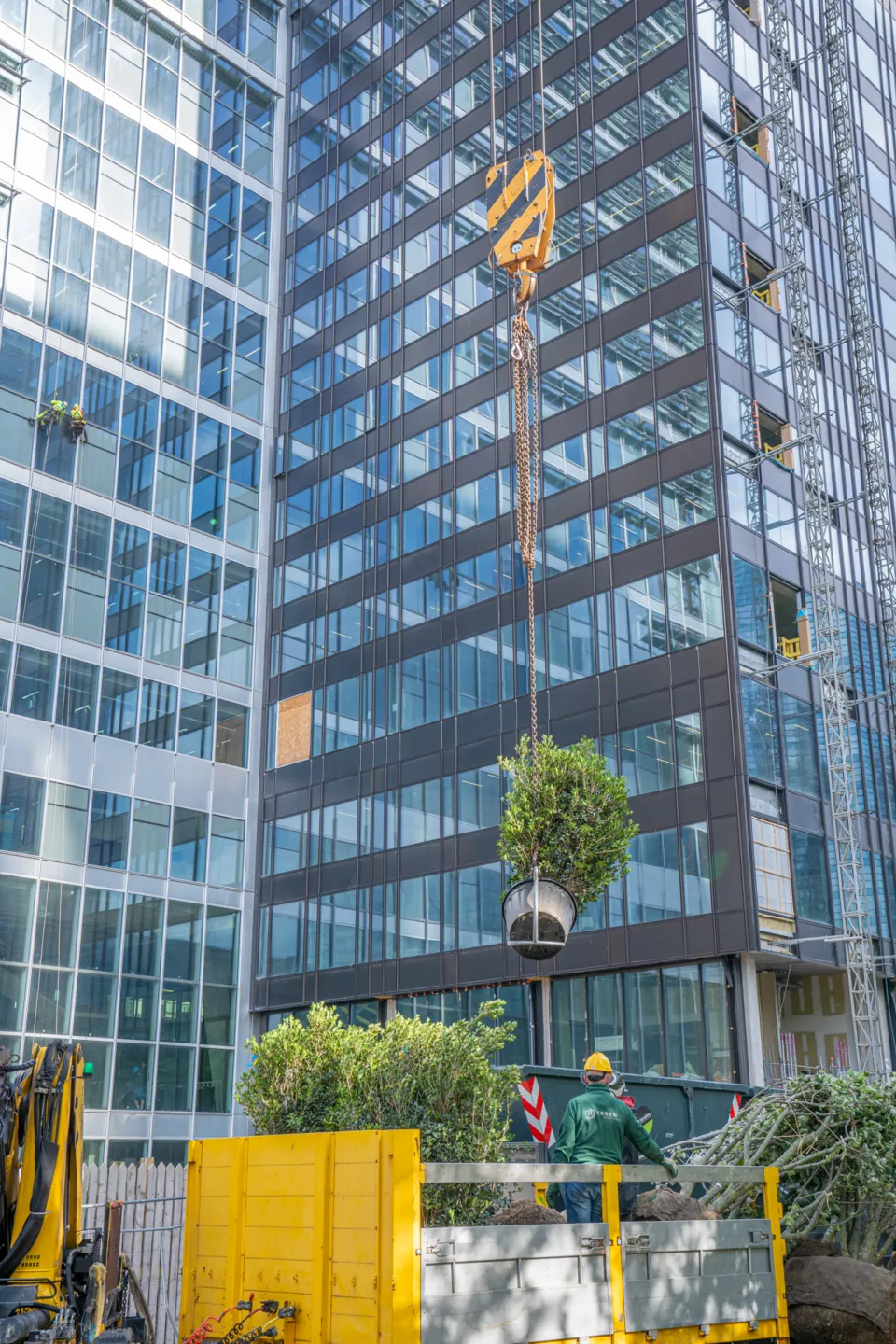
As part of this ambitious project, Plant en Houtgoed designed the green spaces and vegetation strategies for all parts of the building and the surrounding public areas. From a 12-meter-high greenhouse to a rooftop garden at 90 meters, from indoor planting on office floors to a green façade structure – together, they form a mosaic of habitats that reinforce and expand the connection with the surrounding green network.
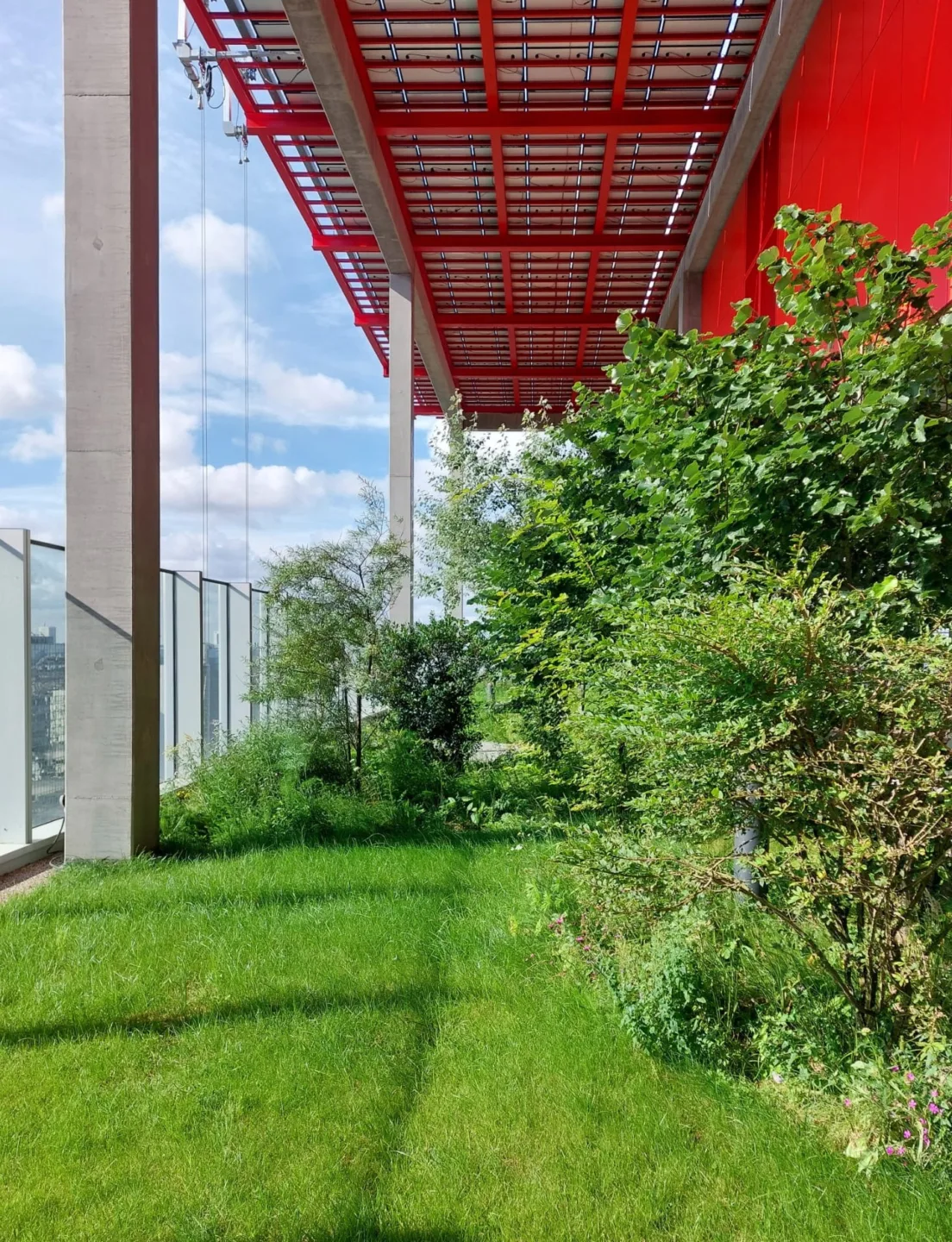
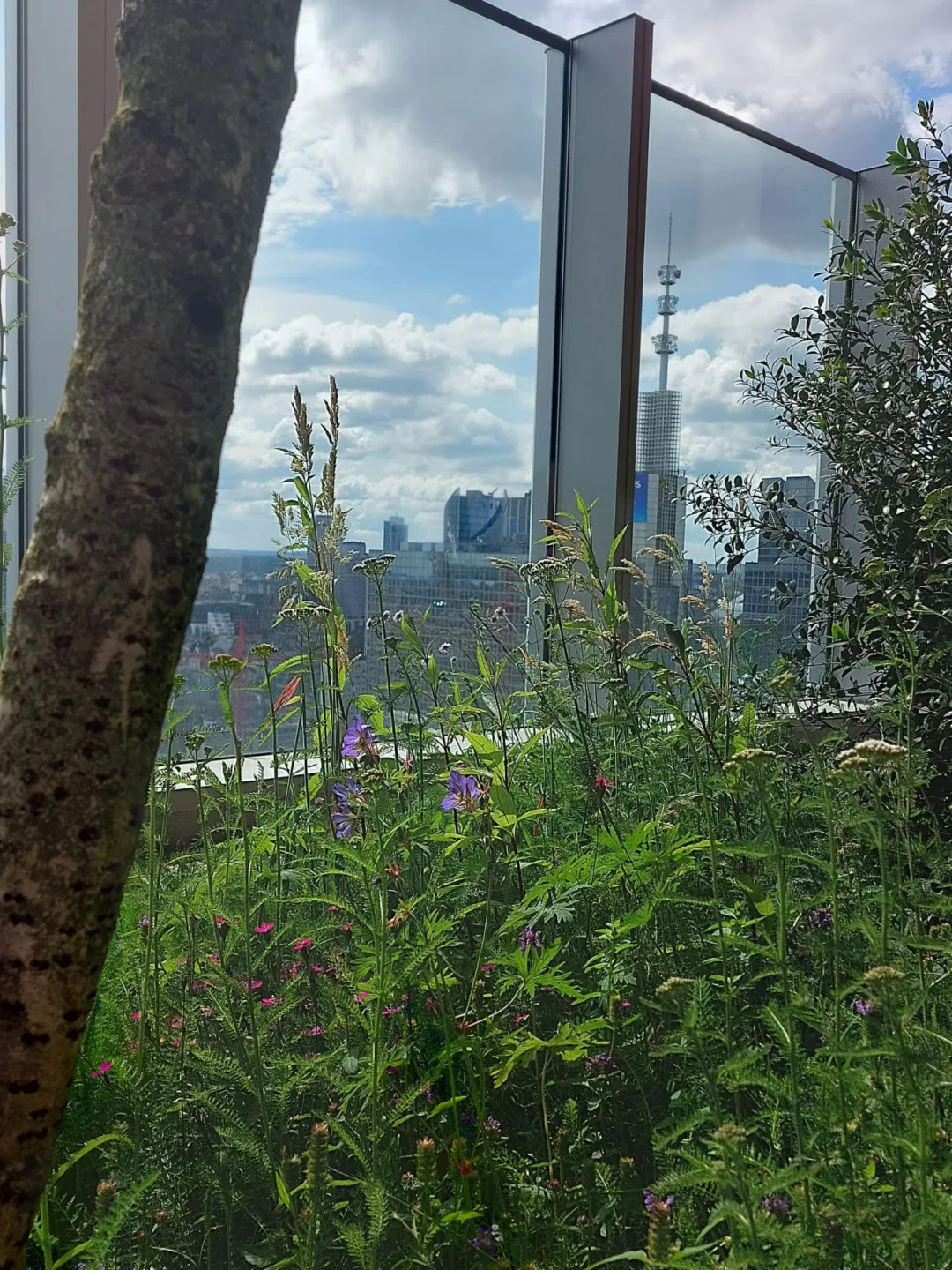
Rooftop Garden at Altitude
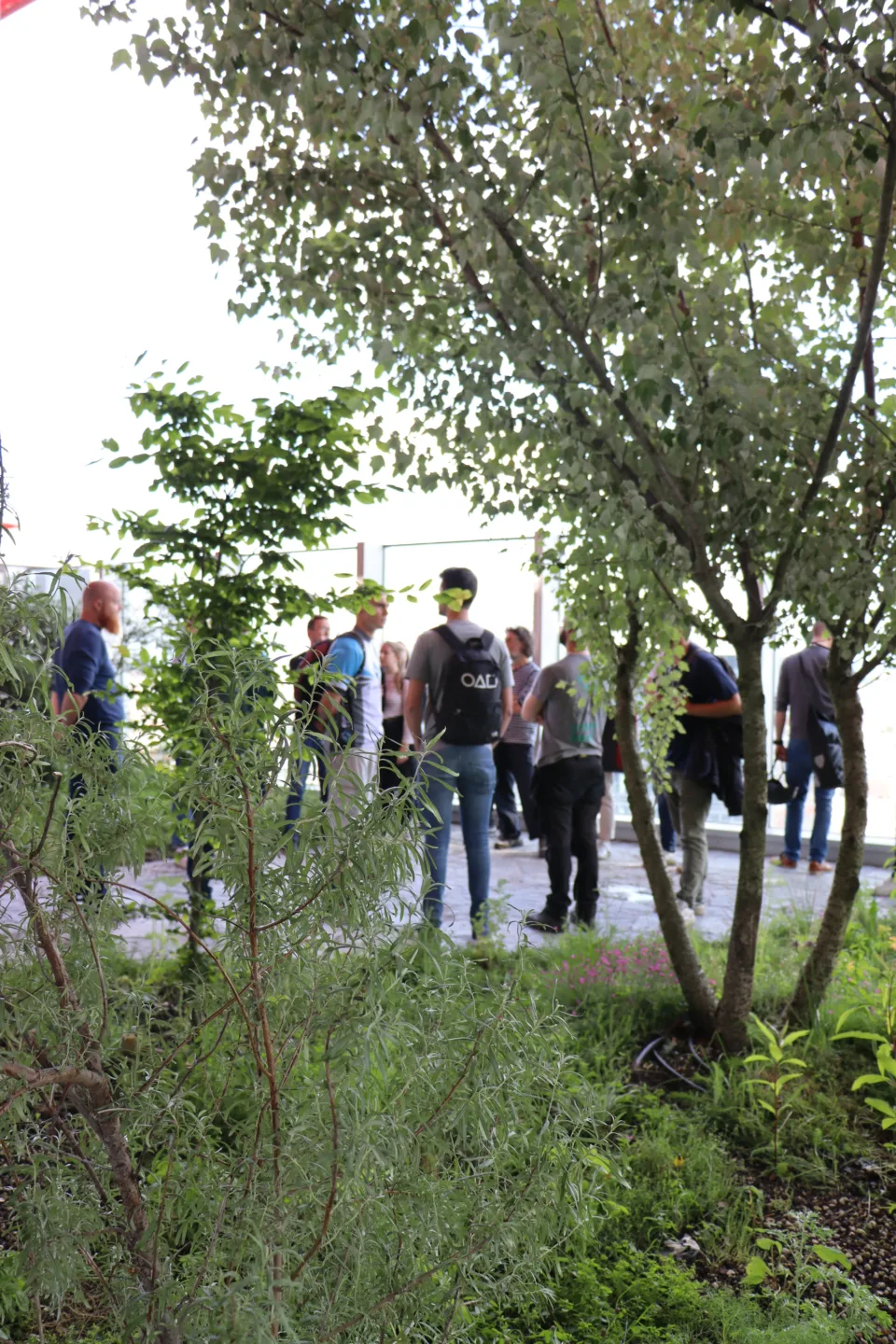
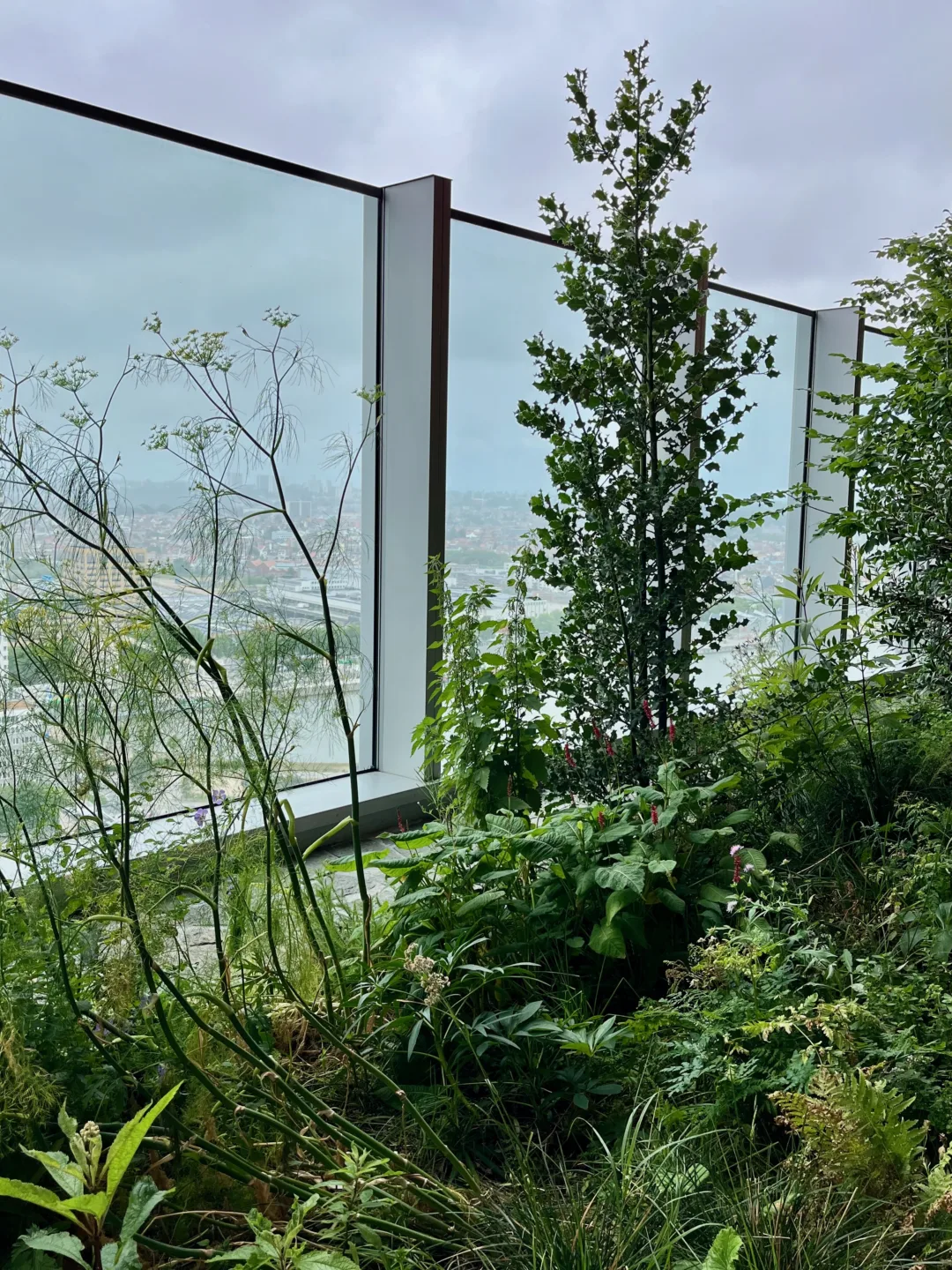
The rooftop garden at a height of 90 meters – one of the highest in Belgium – was designed as a robust habitat based on maritime and pioneer species with high wind resistance. This specific planting concept aligns seamlessly with thermophilic urban vegetation types and demonstrates how, even under extreme conditions, a biodiverse and visually rich garden can emerge with a core of native species.
Entrance Greenhouse
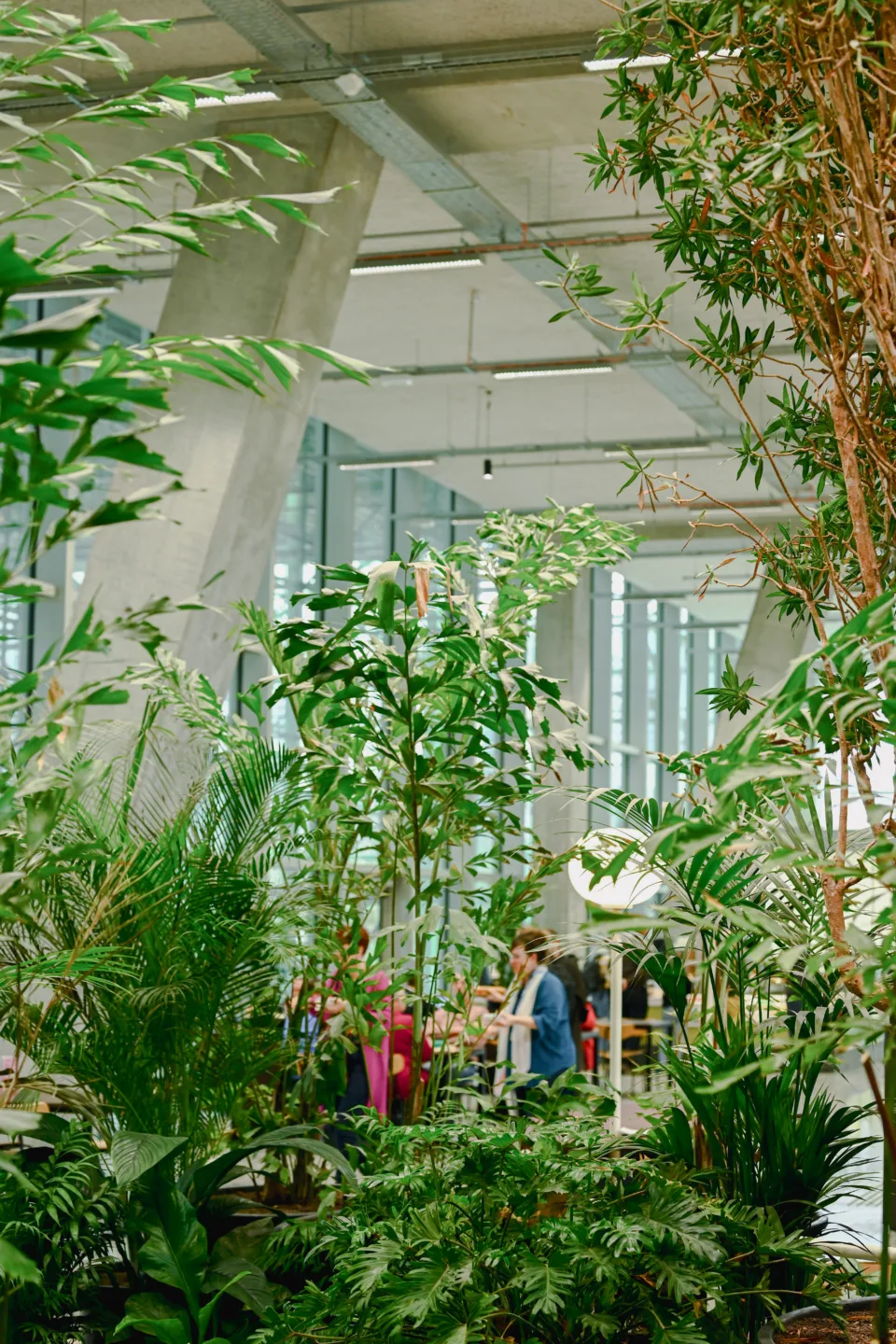
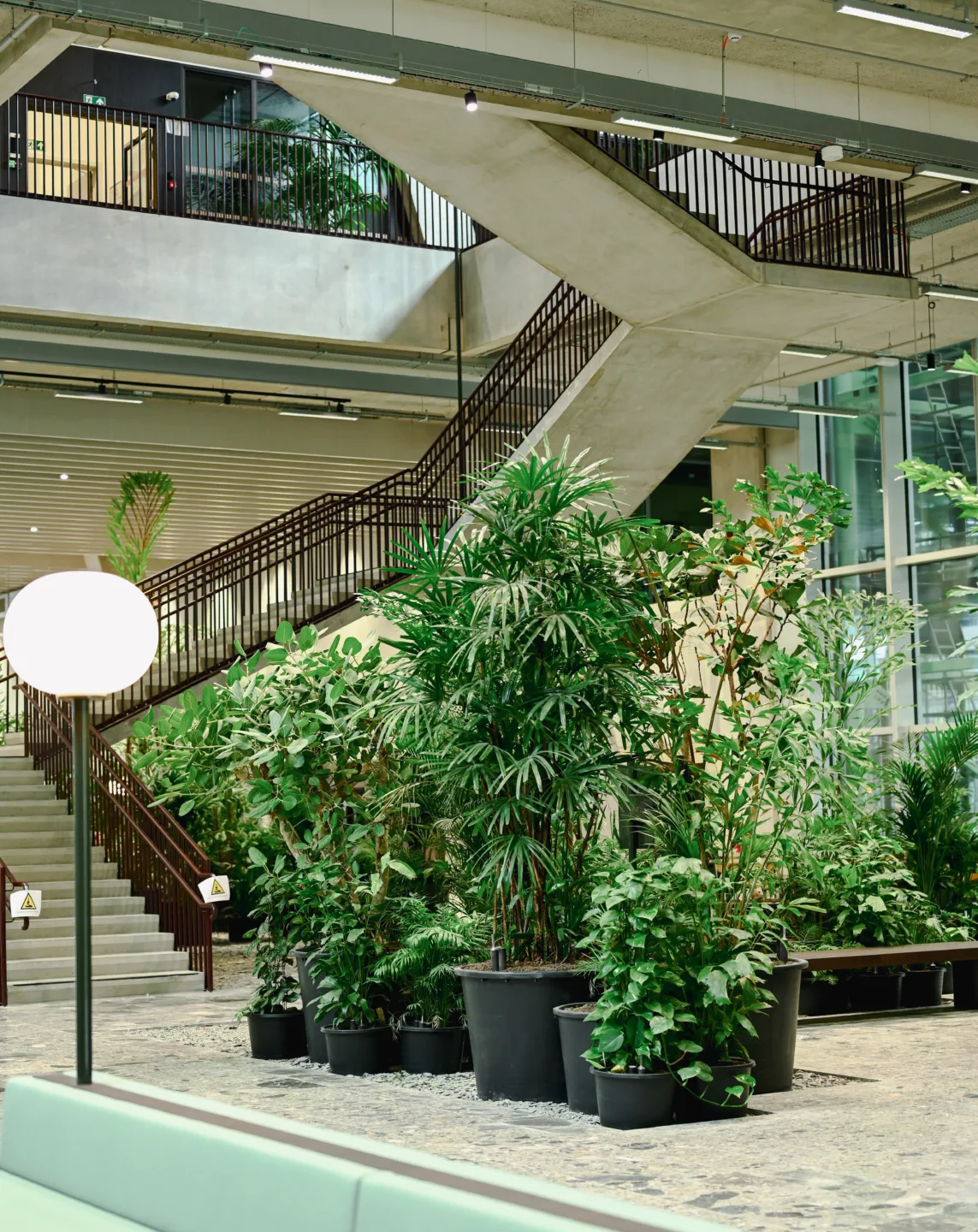
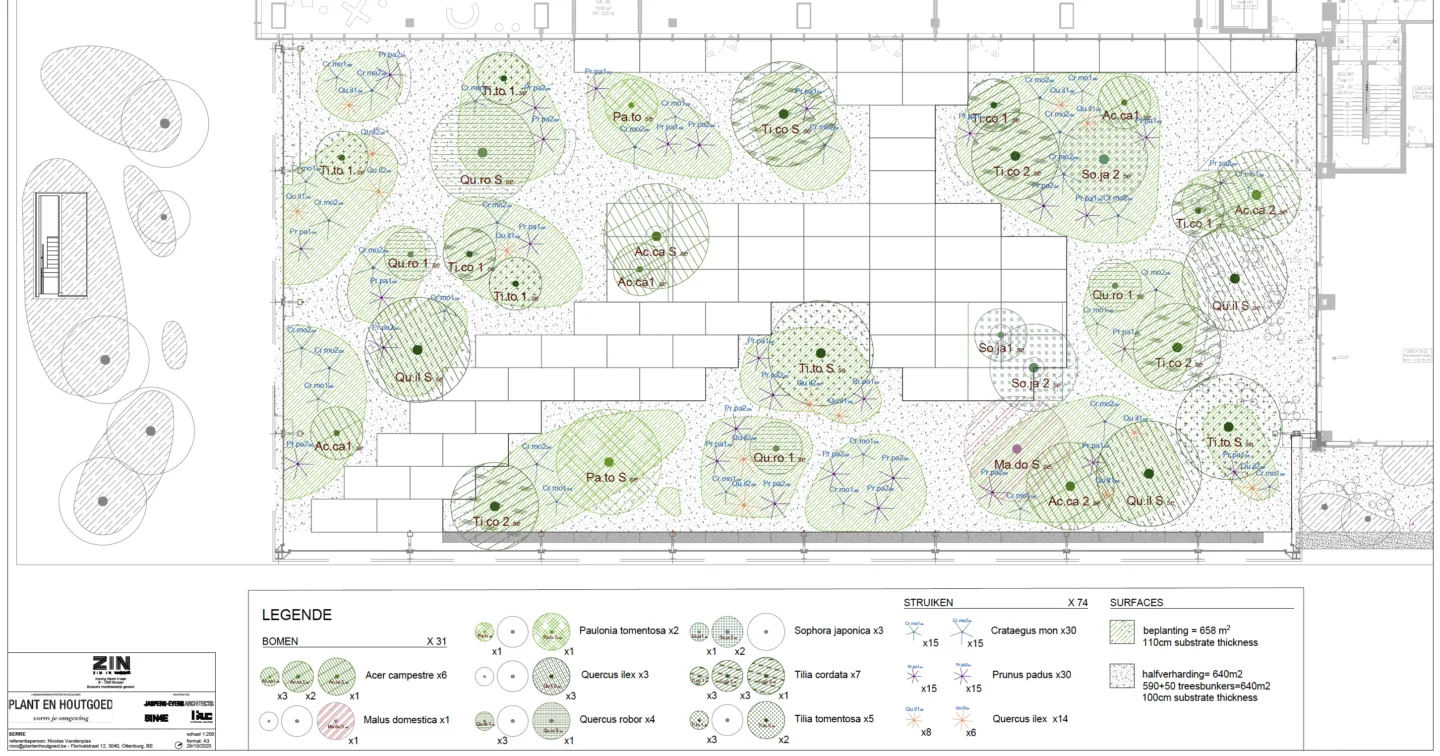
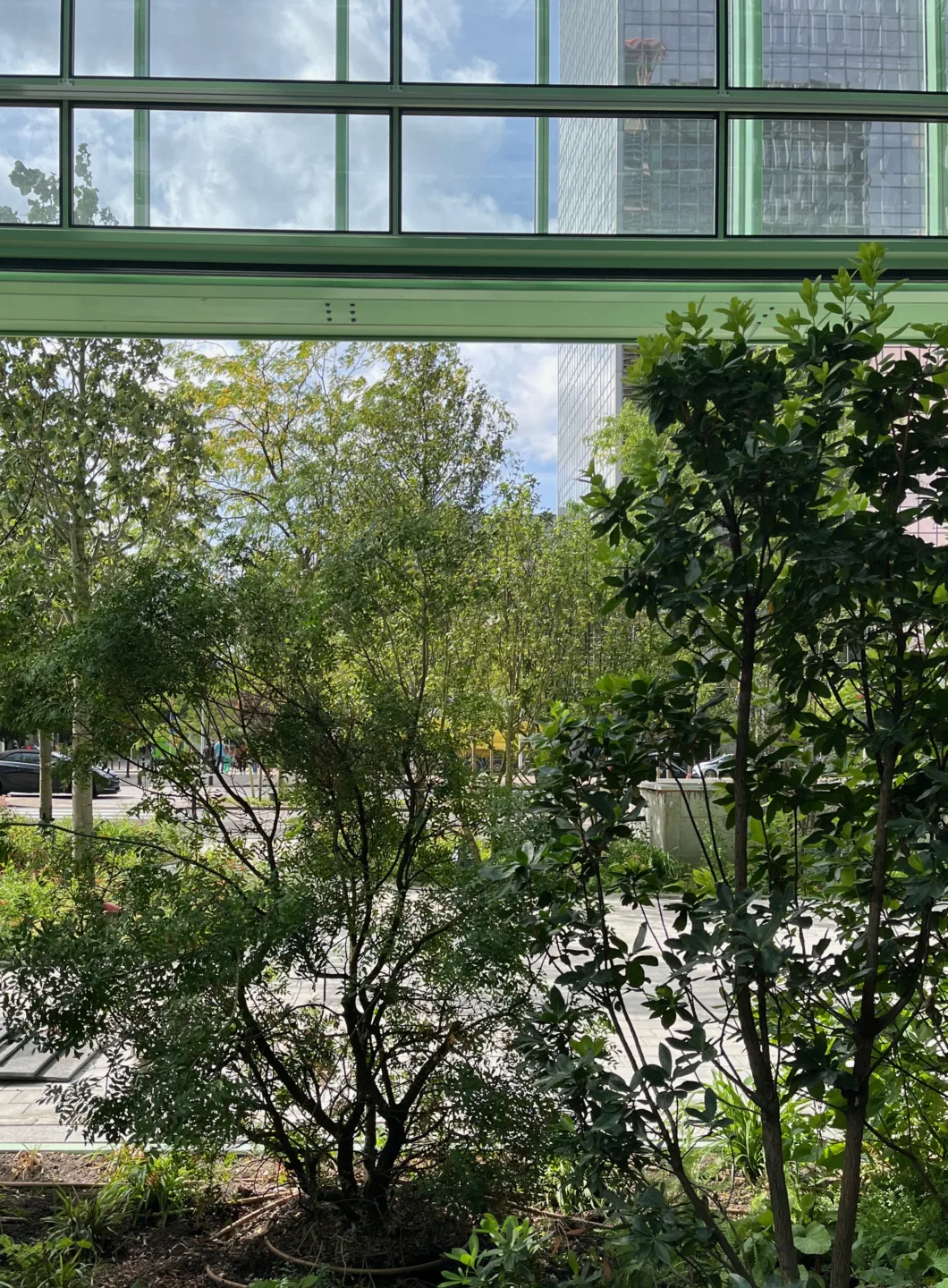
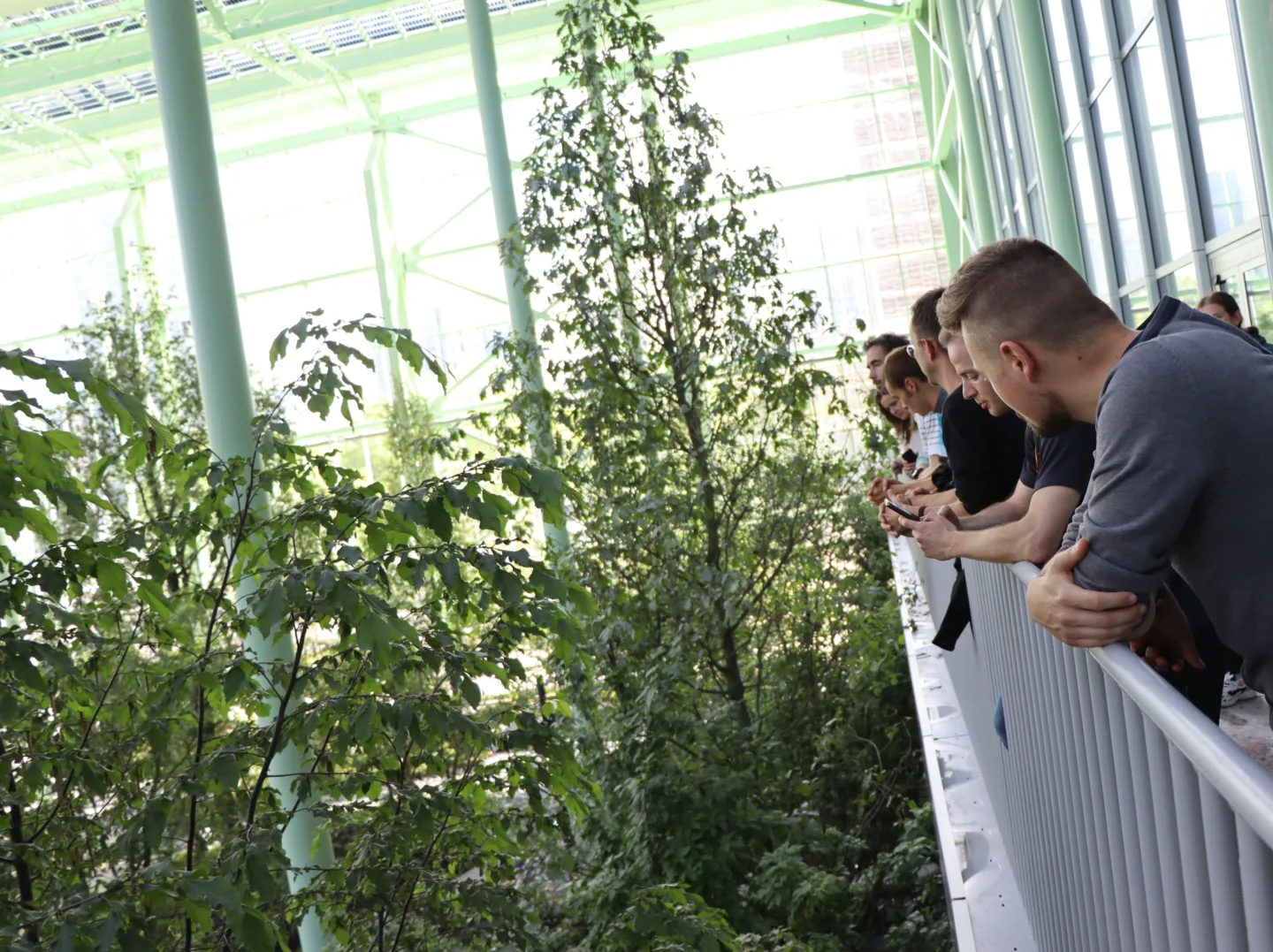
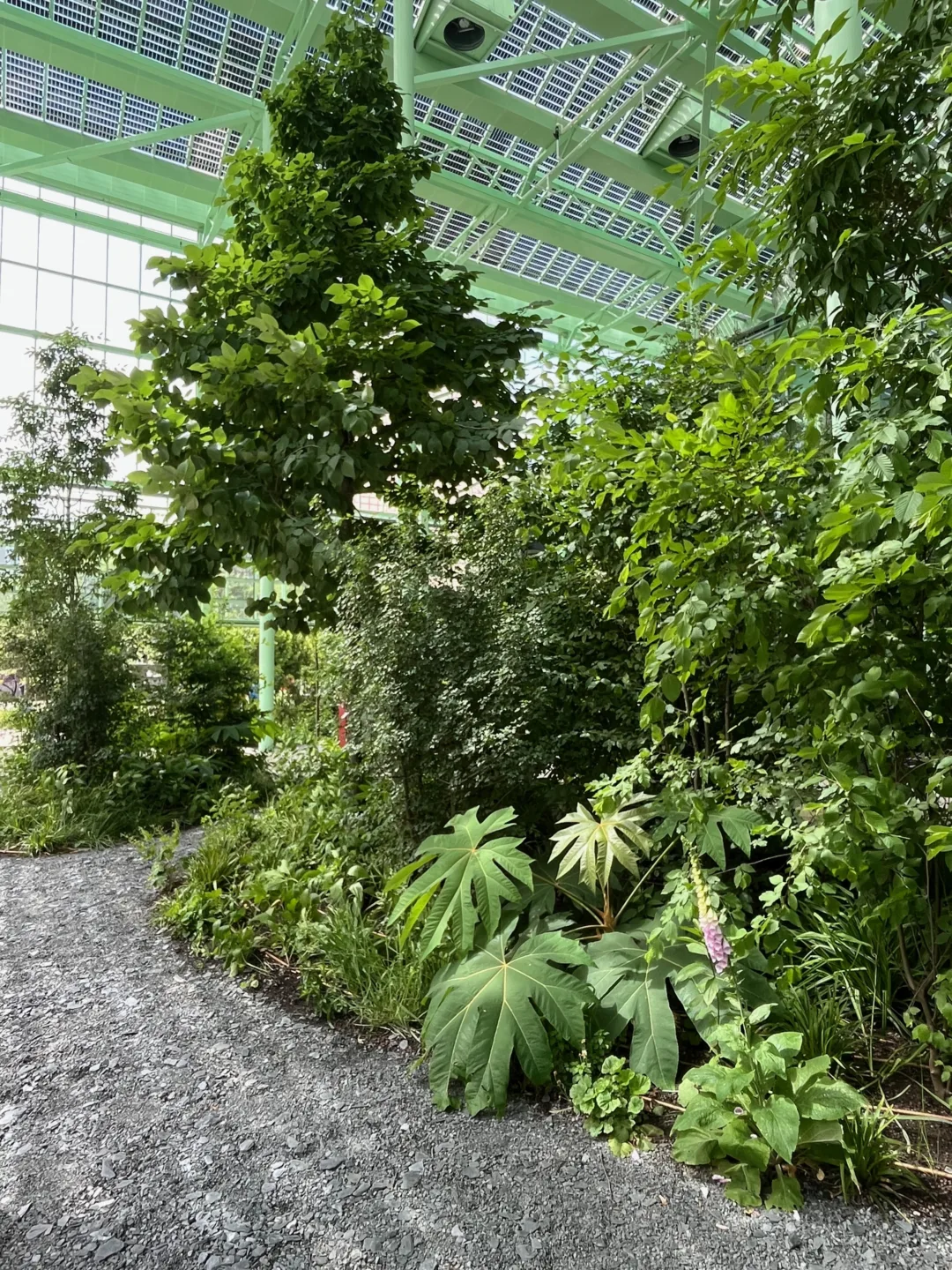
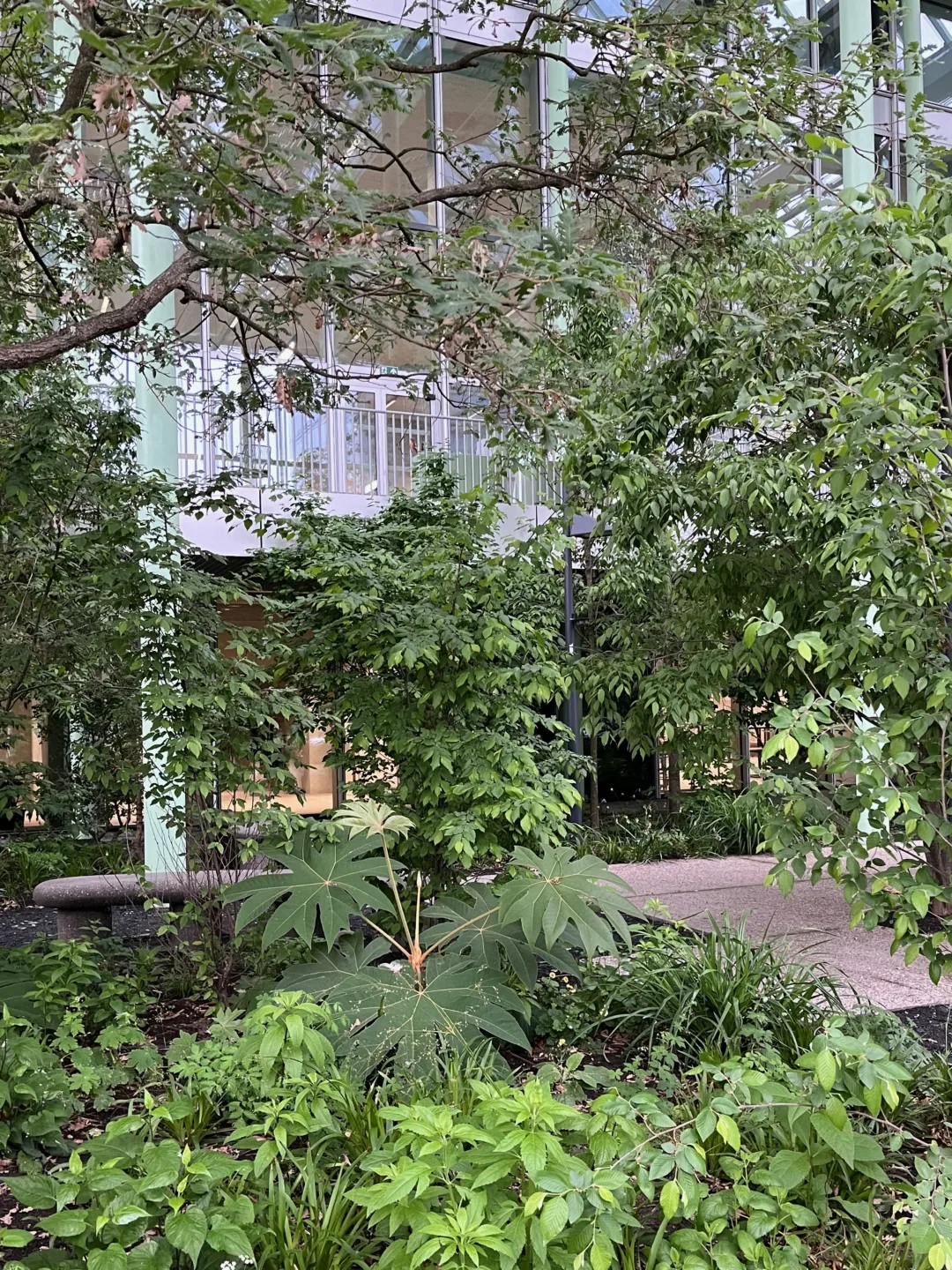
The 2,000 m² greenhouse functions as a green oasis in the stony North District. A multi-generational planting of trees, shrubs, and a diverse herb layer creates a sheltered ecosystem that invites rest and experience. Thanks to an informal path structure and the use of species with sensory qualities such as scent, color, and texture, an immersive nature experience arises in the heart of the urban fabric.
Office Floors
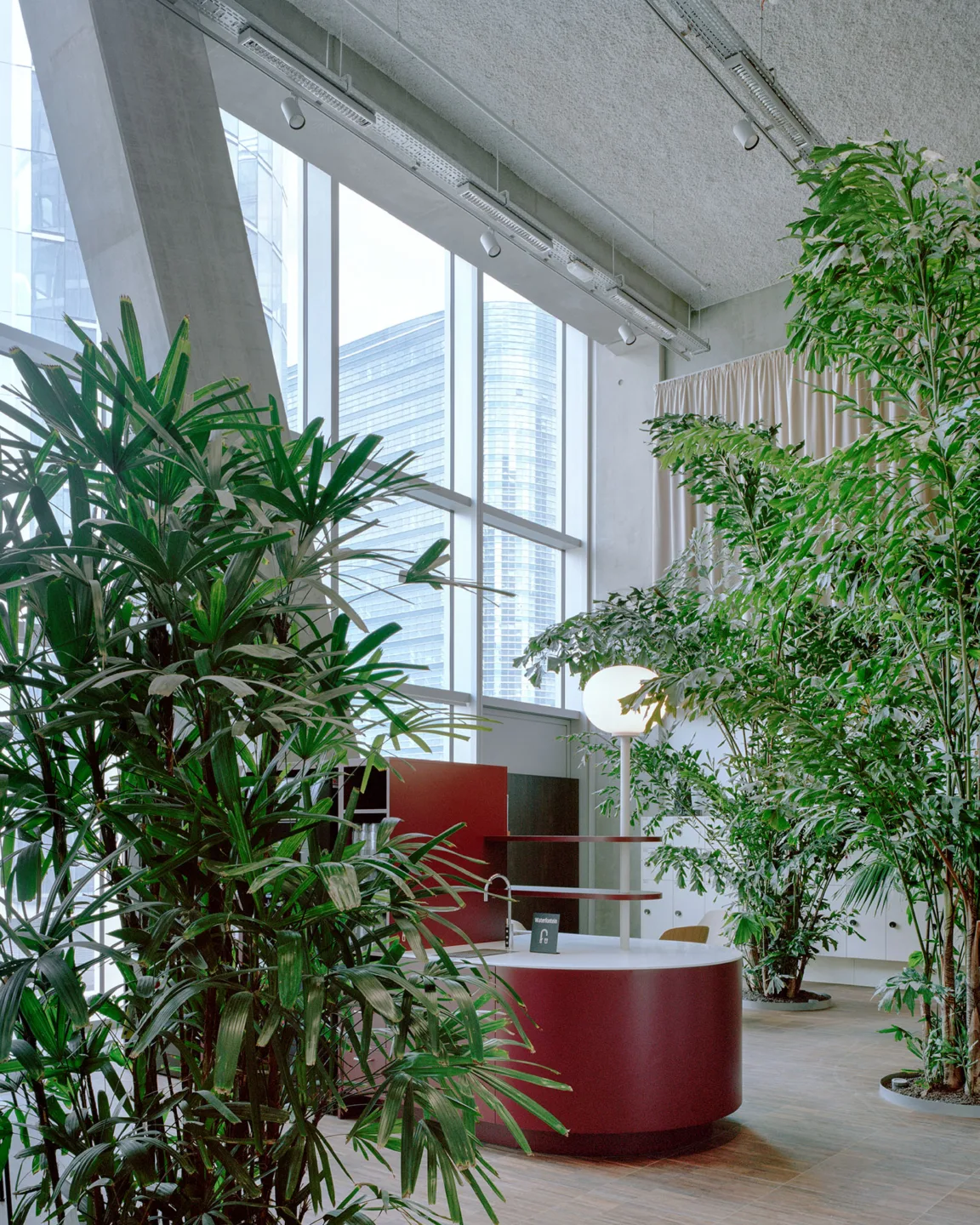
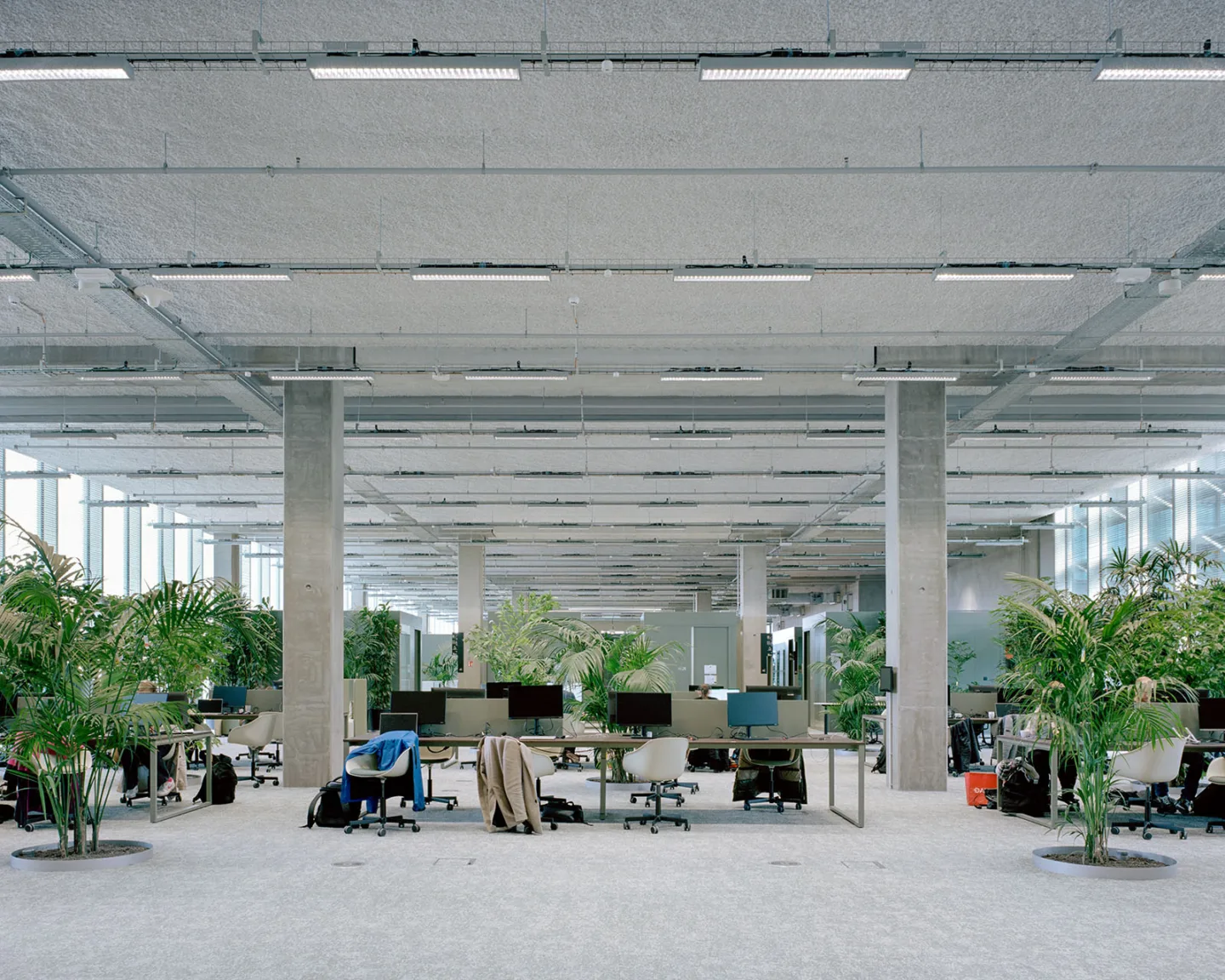
The vegetation strategy for the office floors uses a dual approach: a permanent ‘young forest’ embedded in the flooring and a ‘mobile forest’ in pots that evolves with the needs of both users and plants. This layered approach makes the greenery functional and adaptable, improves the indoor climate, and ensures that nature is visually present at every workspace.
Green Façade
The green façade was deliberately designed with a low-tech approach using deep substrate containers on each floor. This allows for the integration of larger shrubs and robust perennials. With pioneer species such as trembling aspen and white poplar, a living green veil emerges over the years, activating the façade both ecologically and aesthetically, with minimal irrigation requirements.
Public Space and Greening
The outdoor space around the ZIN complex is being de-paved and restructured with a layered vegetation structure that extends the greenhouse ecosystem down to street level. This results in biodiverse urban biotopes that are woven into the public domain and contribute to the greening and climate resilience of the North District.
ZIN proves that nature-inclusive construction is possible on a large scale. The project unites functionality, sustainability, and experience in an ecosystem deeply rooted in both the urban network and the lived experience of its users.
Het ZIN-project transformeert de voormalige WTC I en II-torens in de Brusselse Noordwijk tot een hybride complex waarin kantoren, woningen, een hotel, winkels en sportvoorzieningen samenkomen. Dit grootschalige herbestemmingsproject staat model voor een duurzame en circulaire stadsontwikkeling, met maximale inzet op hergebruik, flexibiliteit en ecologische integratie. Het centrale kantoorgedeelte, het Marie Belpairegebouw, biedt plaats aan 3.900 Vlaamse ambtenaren en vormt zo het belangrijkste administratieve centrum van de Vlaamse Overheid.
Binnen dit ambitieuze project ontwierp Plant en Houtgoed de groenruimten en vegetatiestrategieën voor alle gebouwonderdelen en de omliggende publieke ruimte. Van een serre van 12 meter hoog tot een daktuin op 90 meter, van indoor beplanting op de kantoorverdiepingen tot een groene gevelstructuur: samen vormen ze een mozaïek aan habitats die de connectie met het omliggende groenweefsel versterken en uitbreiden.
Daktuin op hoogte
De daktuin op 90 meter hoogte – een van de hoogste van België – werd ontworpen als een robuust habitat, gebaseerd op maritieme en pionierssoorten met een hoge windresistentie. Dit specifieke beplantingsconcept sluit naadloos aan bij thermofiele stedelijke vegetatietypen en demonstreert hoe, ook onder extreme omstandigheden, met een kern van inheemse soorten een biodiverse en visueel rijke tuin tot stand kan komen.
Inkomserre
De serre van 2.000 m² fungeert als een groene long in de stenige Noordwijk. Een multigenerationele beplanting van bomen, struiken en een diverse kruidlaag creëert een beschut ecosysteem dat uitnodigt tot rust en beleving. Dankzij een informele padenstructuur, en het gebruik van soorten met geur-, kleur- en textuurwaarde, ontstaat een immersieve natuurervaring midden in het stedelijke weefsel.
Kantoorverdiepingen
De vegetatiestrategie voor de kantoorverdiepingen hanteert een tweesporenaanpak: een vast ‘jong bos’ ingebed in de vloer en een ‘mobiel bos’ in potten dat meegroeit met de noden van gebruiker én plant. Deze gelaagde aanpak maakt het groen functioneel en approprieerbaar, verhoogt het binnenklimaat en maakt het visueel aanwezig op iedere werkplek.
Groengevel
De groengevel werd bewust low-tech ontworpen via diepe substraatbakken op iedere verdieping. Zo kunnen ook grotere struiken en robuuste vaste planten geïntegreerd worden. Met pioniersoorten zoals ratelpopulier en grauwe abeel ontstaat na enkele jaren een levende, groene sluier die de gevel ecologisch én esthetisch activeert, met minimale irrigatiebehoefte.
Publieke ruimte en vergroening
De buitenruimte rond het ZIN-complex wordt onthard en heringericht met een gelaagde vegetatiestructuur die het ecosysteem van de serre laat uitwaaieren naar het straatniveau. Zo ontstaan biodiverse urbane biotopen die verweven zijn met het publieke domein en bijdragen aan de vergroening en klimaatbestendigheid van de Noordwijk.
ZIN bewijst dat natuurinclusief bouwen op grote schaal mogelijk is. Het project verenigt functionaliteit, duurzaamheid en beleving in een ecosysteem dat diep verankerd is in het stedelijke netwerk én in de ervaring van haar gebruikers.